
Perched on the southeast coast of Rhodes, this village is famed for its whitewashed houses, winding cobblestone streets, and breathtaking views of the Aegean Sea.
Lindos traces its roots back to the 10th century BC, when it emerged as a powerful trading and maritime center for the ancient Greeks. The city flourished under the influence of the Dorians and later became a significant naval base during the Classical period.
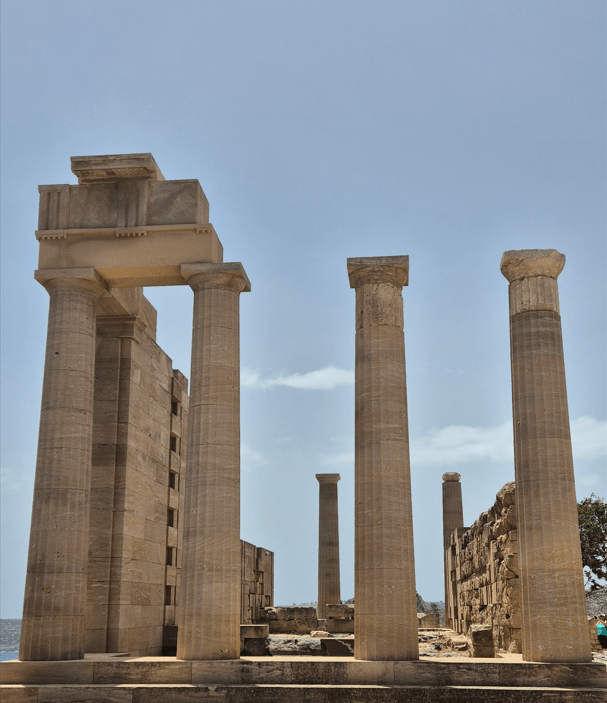
Lindos is perhaps best known for the Acropolis of Lindos, which towers above the village and showcases remnants from the Greek, Roman, and Byzantine eras. The Temple of Athena Lindia, built around 300 BC, stands as a testament to the region’s rich cultural heritage.
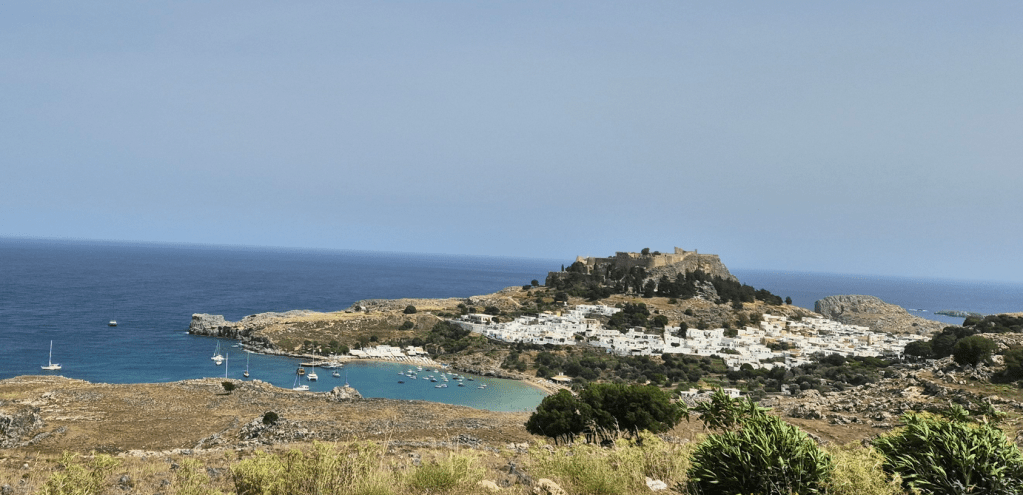
OK, people might be very confused. Isn’t the Acropolis in… Athens? Well, Acropolis is a generic term used in ancient Greece referring to a city that was built on higher ground, such as on top of a hill. The word comes from άκρον (top) and πόλις (city), basically translated as the city from the top or the upper city. The Acropolis was mainly a religious place, hence the still standing ruins of the temples dedicated to different gods, but mainly to Athena, the godess of wisdom and tactic warfare. It was also the place where high status citizens and priests or priestesses resided, but not a place for the common citizens. Basically, like a palace or a modern day exclusivist neighbourhood. There are multiple Acropolises in Greece, but the most famous is the one from Athens, UNESCO World Heritage Site.
Today, Lindos is probably the best known vacation place in Rhodes, being extremely popular for those that seek a relaxing holiday. And it’s no wonder, since almost all tour operators have hotels from here in their portfolio. It also the second most visited place in Rhodes, after Rhodes Town, as those that disembark from cruise ships book a half a day trip here.
Things you can do here:
- Visit the Acropolis of Lindos: Climb up to the ancient Acropolis for panoramic views and explore the ruins of the Temple of Athena, ancient walls, and Hellenistic stoa. The ascent is steep but rewarding, offering glimpses into Lindos’ storied past.
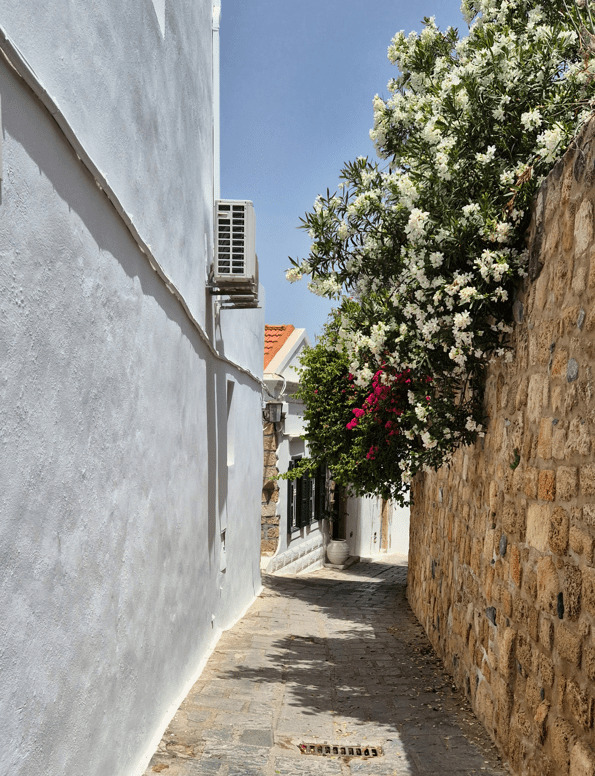
- Stroll Through the Village: Wander the narrow, winding streets lined with charming shops, traditional tavernas, and beautiful mosaic courtyards. The unique architecture and lively atmosphere make for an unforgettable experience.
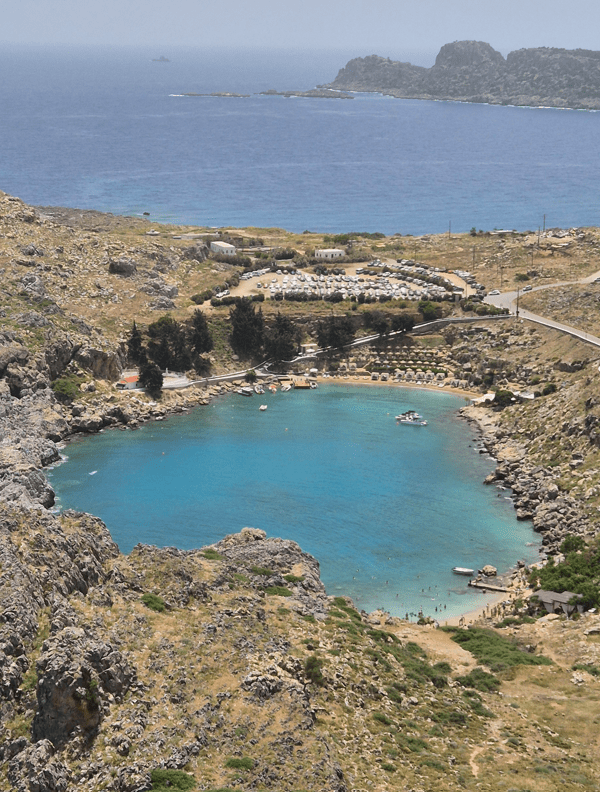
- Relax at St. Paul’s Bay: This sheltered bay is one of the most scenic beaches in Rhodes, perfect for swimming, sunbathing, or enjoying a meal by the water. Its turquoise waters and dramatic cliffs make it a favorite among visitors. Viewed from the Acropolis, from a certain angle, it looks like a heart shaped inland sea
- Explore the Church of Panagia: Located in the heart of Lindos, this beautiful Byzantine church features impressive frescoes and an ornate bell tower. It’s a peaceful spot to appreciate local history and artistry.
How to get to Lindos:
- By car: The best way to explore the island, but keep in mind that cars are not allowed in the village. There are 2 parking lots at the entrance – one next to the main road, next to the bus stop and one between the main road and the main square – but they are not free, as far as I know. Also, you can use the parking lot from St. Paul’s Bay, but there will be a longer walk from there
- By bus: There are frequent buses that connect Rhodes Town to Lindos, every 30 minutes or even more frequent in the summer months. The ticket price is 5.5 euro/one way
- By organized day trip: Almost all local agencies and tour operators include Lindos in the schedule of a one day trip, usually combined with other important landmarks, such as: 7 springs, Butterfly valley or the “Big tour of the island”
- By boat: Daily cruises from Rhodes Mandraki port to Lindos which also include swimming or photo stops at Anthony Quinn Bay or Tsambika beach. Or you can rent a catamaran
Goot to know before you go:
- Cars are NOT allowed in the village. From the parking lots you can take a shuttle bus to the main square or walk
- The streets are very narrow and very crowded. In the peak season it might give you an uncomfortable sensation of agoraphobia.
- There are plenty of souvenir shops, tavernas and cafes.
- The way to the Acropolis is well signed and there are 2 options: 1 is through the center and the other is on the donkeys’ path.
- Speaking of donkeys, please don’t use them to get to the Acropolis! If you can’t walk, just enjoy a coffee or a gyros and spare the poor souls.
- The streets that follow the donkeys’ path smell like a stable even in late May-early June. The donkeys leave behind the normal result of any living creature with a digestive system and kidneys and the heat amplifies the smell.
- Wear comfortable shoes, sunscreen, light clothes and hat. The scorching summer sun is no joke.
- As the Acropolis is an archaeological site, high heels are NOT allowed. And they might not be the best idea for the path to get there, trust me 😉
- There are many places perfect for an instagram story, reel or post, but be considerate as people actually live in those houses.
- There is a large sandy beach with bars and restaurants close to the entrance. The way is well signed.
 Skyline Stories