
Although I have already mentioned these landmarks as must see in Rhodes Town, I wanted to do them justice and detail each of them, as they are impressive and unique in both European and Greek heritage.
A little bit of history first 🙂
As all kids in Europe, we start learning universal history in the 5th grade. Each year we learn about a specific time range in history and about all major events that happened and shaped not only Europe, but the rest of the world too, from Paleolithic to current years. So it’s not uncommon for us to be very familiar with Ancient Greece and Hellenism, the Roman, Persian and Byzantine Empires, Ancient Egypt and its Pharaohs, the Crusades, The Middle Ages, Renaissance, the great discoveries, the pre-Hispanic civilizations (Mayas, Aztecs, Incas), the empires and kingdoms in Europe and Middle East, French Revolution, Balkan Wars, WWI and WWII and their importance to the world as we know it today.
When we study about the Crusades, we not only get to know the reasons they started, but also about the aftermath of these holy wars, as they were called, and notable people that took part in them.
When most people hear that Rhodes is nicknamed “the island of the knights” and Malta is “the country of the knights”, the first thing that comes to their mind is the name of the Knights Templar, as they were the most famous order, well known today after it was romanticized in Hollywood productions and historic fantasy. But it’s not them.
The knights that built and fortified the Medieval City of Rhodes were actually the Knights of the Order of St. John or Knights Hospitaller. The order was initially founded in the 11th century AD when some rich merchants from the Amalfi Coast founded a hospital in Jerusalem dedicated to St John the Baptist where Benedictine monks used to treat and care for the sick, poor and wounded Christian pilgrims. In the early 12th century the Pope recognized them as a sepaarte order and soon after they became militarized, participating in the defense of the Holy Land. They can be differentiated from the Templars by the colours of their clothes: a white cross on a red or black background, compared to red cross on a white background (templars).
The order was a military one, but the knights had to take the oath of chastity and celibacy (like the monks). Their leader was called Grandmaster and the most famous one is Jean Perisot de la Valette, after whom the city of Valetta (capital of Malta) took its name.
After the fall of Acre in 1291, they left the Holy Land and settled for 8 years (1302-1310) at Kollosi Castle in Cyprus. Seeing themselves too entangled in the Cypriot politics, the Grandmaster of the time looked for a land they could own and laid his eyes on Rhodes, then part of the Byzantine Empire. After four years of campaign, the city of Rhodes surrendered to the knights in 1310 and they settled here for more than 200 years until 1522, when it was conquered by the Ottoman Empire after a 6 months siege. In Rhodes, the knights were sovereign (similar to an independent country today) and started to build new and fortify the existing buildings. Given the strategic position of the island in the Mediterranean and on the main trade route between Middle East and Europe, it became a target for pirates, the Egyptian sultan and later the Ottoman Empire.
The Grandmaster’s Palace: Fortress of Power
Standing majestically at the highest point of the Medieval Town, the Grandmaster’s Palace, or the Palace of the Grand Master of the Knights of Rhodes, is an architectural marvel. Originally built in the late 7th century as a Byzantine citadel, it gained its current form in the 14th century when the Knights Hospitaller made Rhodes their stronghold. Serving as the residence of the Grand Master and administrative center of the Knights, the palace was both a fortress and a symbol of their power.
The Palace was severely damaged in the siege of Rhodes and after that in the 19th century, during the Greek War of Independence, when the gunpowder stash exploded. The building that we see today was restored at the beginning of the 20th century.
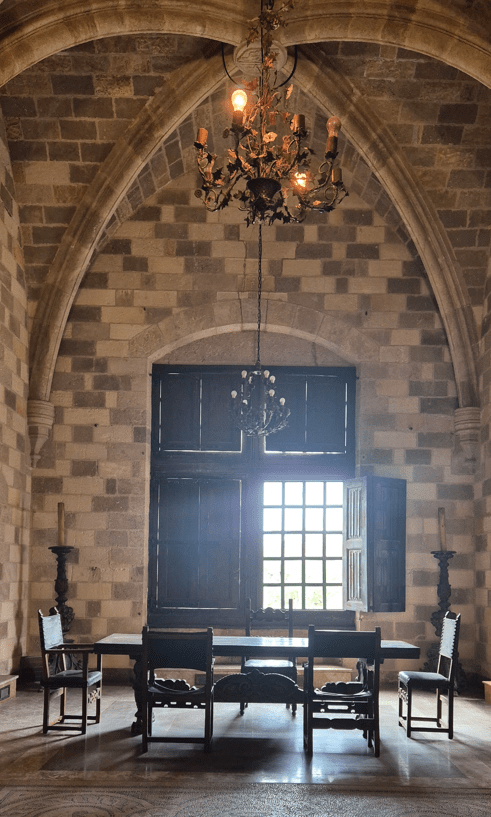
Visitors today can explore its opulent halls with Gothic arches, a signature of the medieval architecture,
intricate mosaics,
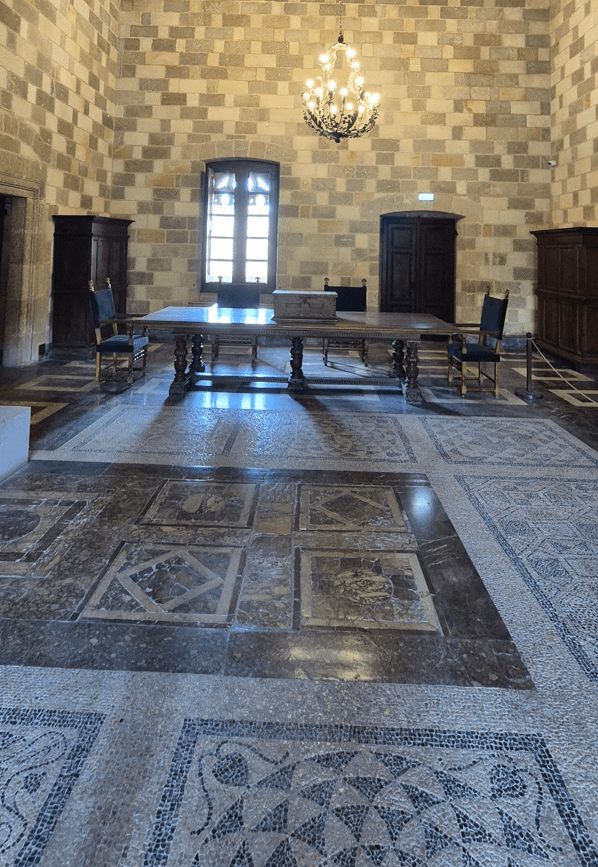
and imposing towers. Some of the rooms reminded me of Pena and Quinta da Regaleira because of the small coloured tiles.
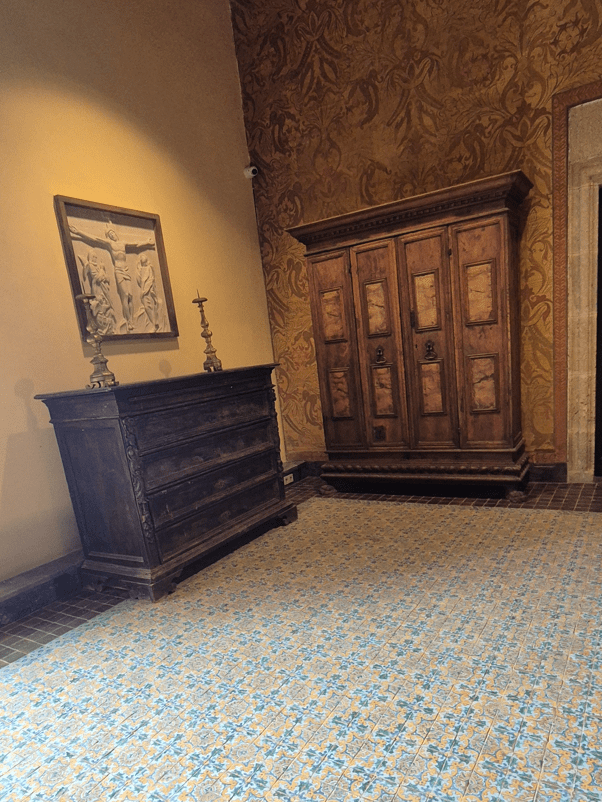
The palace also houses a museum, displaying medieval artifacts, furniture, and historical documents. The back garden has statues depicting different gods or Roman emperors, such as Trajan (of course I can recognize him, his face is all over our history books as he conquered Dacia and made it a Roman province, that’s why we speak a Latin language in the middle of a Slavic sea).
The interior courtyard is a monument by itself, with arcades and stairs leading to doors that were once used
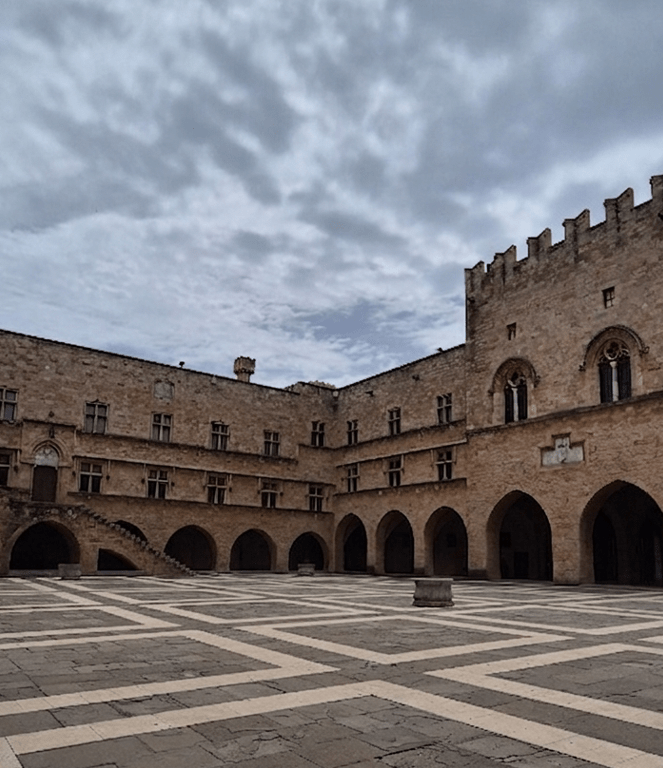
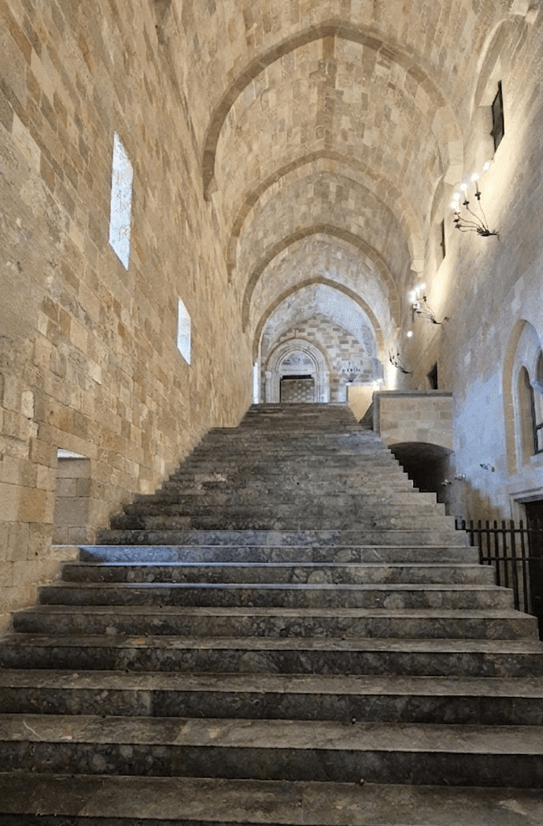
And the first thing you will see is the huge staircase
Important things to know about the Palace and the Archaeological Museum:
- The entry fee is 20 euro/adult at the Palace and 10 euro/adult for the Museum, there are no longer combined ticktes. Guided tours are NOT included in the standard price
- CLOSED on 1 January, 25 March, Greek Orthodox Easter Sunday, 1 May, 25 & 26 December
- OPEN on the following public holidays in Greece: 6 January, Clean Monday, Greek Orthodox Easter Monday, Holy Spirit Monday, 15 August, 28 October.
- FREE ENTRY for all visitors: 6 March (in memory of Melina Mercouri), 18 April (International Monuments Day), 18 May (International Museums Day), the last weekend of September annually (European Heritage Days), 28 October (National Holiday), and every first Sunday of each month from November 1st until March 31st
- High heels are NOT allowed. Wear comfortable shoes
- Photos are allowed, but flash or tripods might be restricted
- Supervise children at all times
- Some areas are not easily accessible for people with reduced mobility
- There are toilets inside the palace, at ground floor
- In the summer months can be very crowded, especially around noon, when most tourist buses arrive
The Archaeological Museum of Rhodes: A Treasure Trove of History
Just a short walk from the palace, the Archaeological Museum of Rhodes is situated in the former Hospital of the Knights. This impressive building, dating back to the 15th century, showcases artifacts from ancient to medieval Rhodes. Highlights include statues, pottery, funerary slabs, and the famous Aphrodite of Rhodes statue.
For history enthusiasts, the museum offers a journey through the island’s multifaceted past, from the Mycenaean era to Roman and Byzantine times. Plan to spend at least a couple of hours here, and check for any temporary exhibitions that may be running during your visit.
The inner courtyard is surrounded with arches
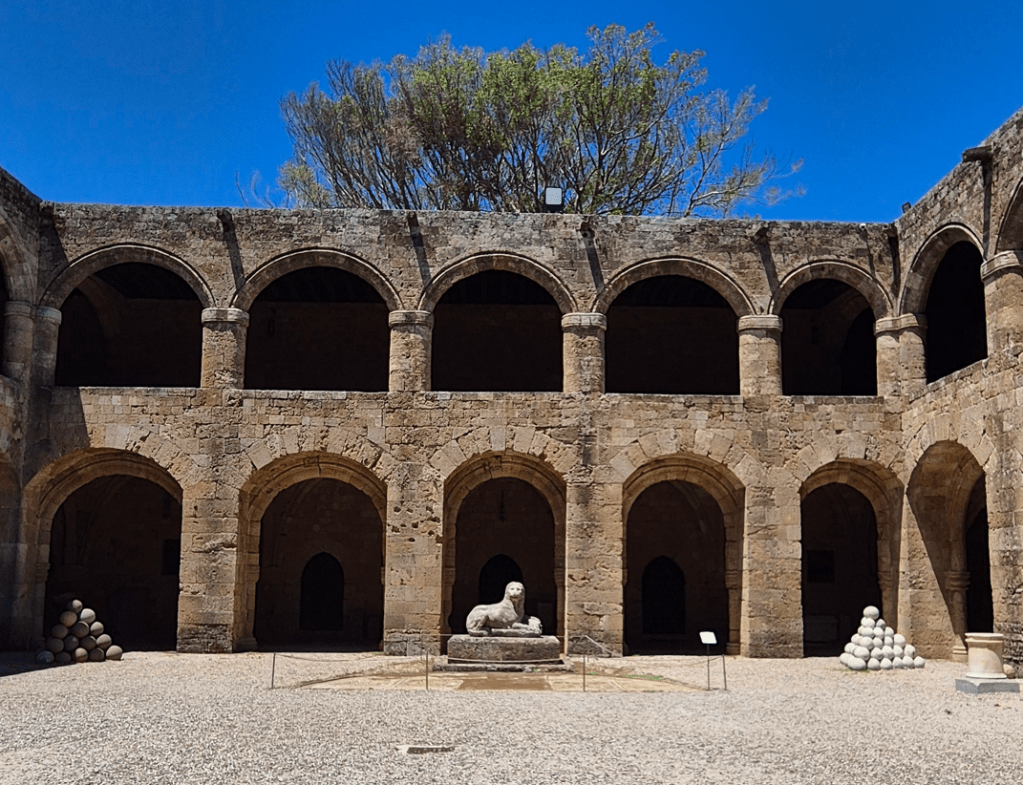
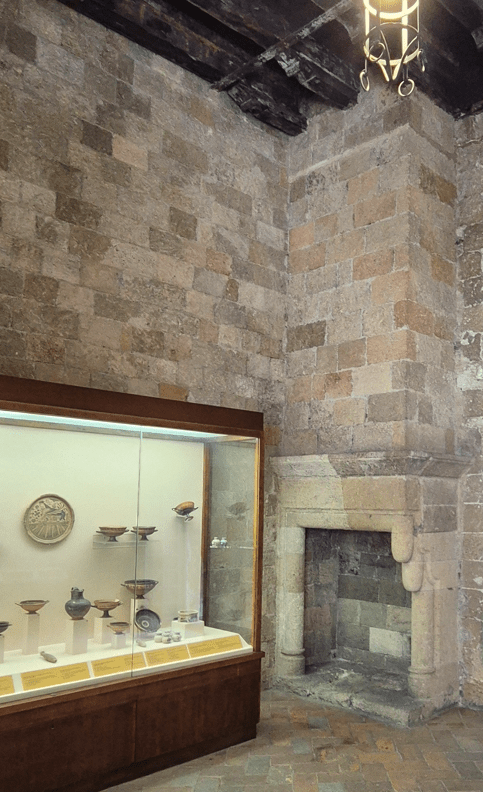
and the upper level, where the exhibitions are displayed, used to be the infirmeries, as all have fireplaces that once used to warm the rooms.
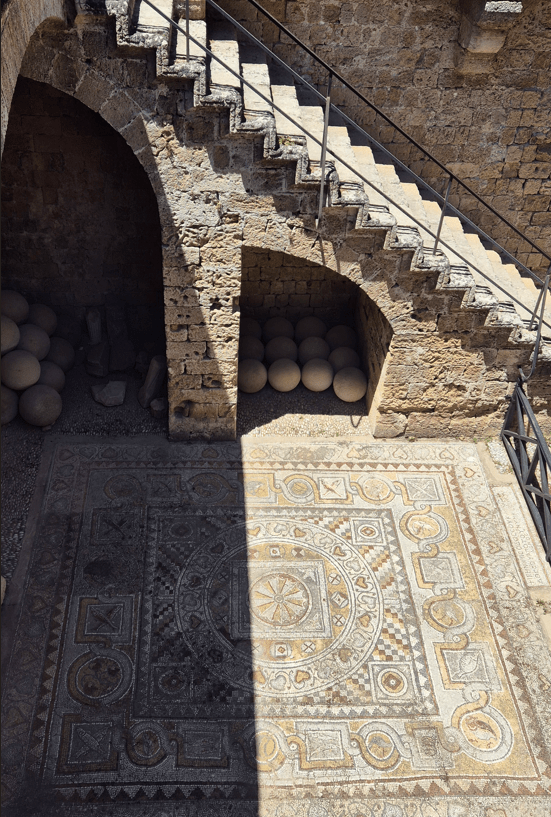
The back yard, at the ground level, has impressive mosaics
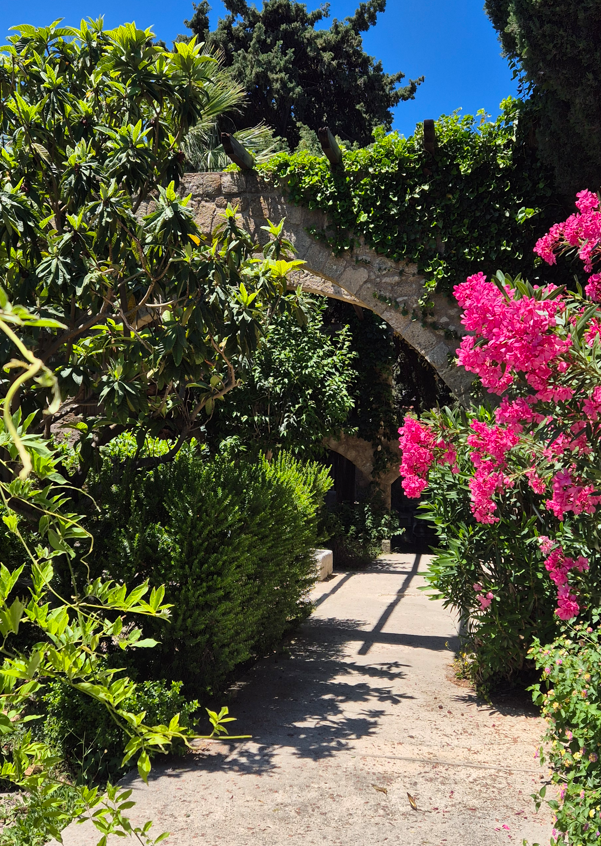
a lush garden where nature and architecture combine
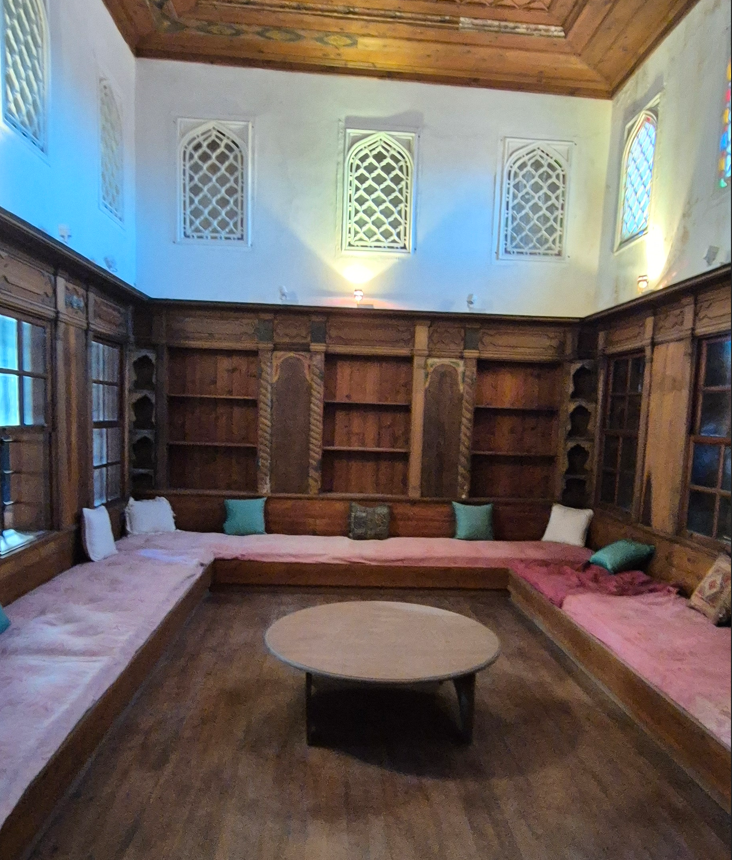
and an Ottoman style house
The Road of the Knights: Walking in the Footsteps of History
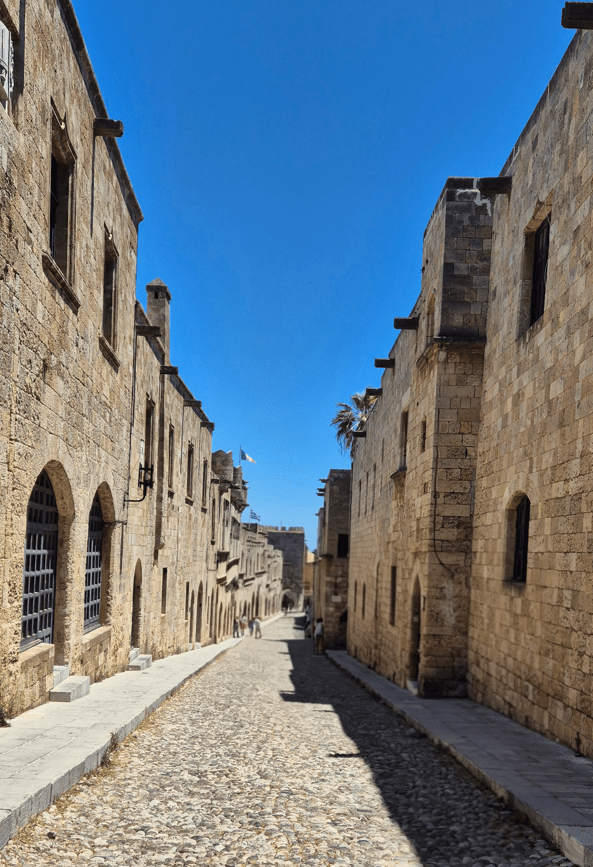
Connecting the Grandmaster’s Palace to the Archaeological Museum, the Road of the Knights (Ippoton Street) is one of the best-preserved medieval streets in Europe. Lined with the “Inns” of the various Langues (nationalities) of the Knights Hospitaller, this cobblestone avenue echoes with the footsteps of crusaders and nobles from centuries past.
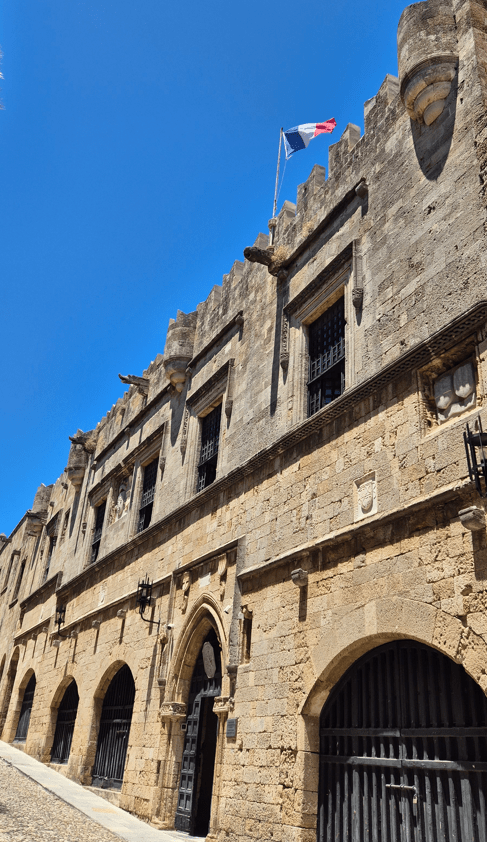
Here you can find the inns of the tongues of Italy, France, Spain and Provence – the order was divided in 7 tongues or languages, based on the nationality of the knights. Today these buildings host diplomatic or cultural institutions of these countries, such as the Consulair Agency of France in the former Auberge or Inn of France
And the Italian Loggia used to host the Italian Foreign Consulate.
As you stroll down the road, admire the Gothic architecture, emblazoned coats of arms, and the atmospheric lanterns that light the way. The area is pedestrian-only, making it perfect for leisurely exploration and photography.
Important things to know:
- The Road of the Knights is now a pedestrian only street
- High heels, flip-flops and thin sole shoes are NOT recommended, as it is paved with cobblestone. Wear comfortable shoes. Also, it can very slippery afetr rain
- As you can see from the pictures, it is an inclined road, so might be unsuitable for people with mobility issues
- Wear a hat and sunscreen and have water with you. Little to no shadow during the day
- Although the doorbells or the doors might look very interesting, DO NOT KNOCK OR RING! There are people working or even living there. This type of areas are not a theme park and locals are very frustrated about tourists that find very fun to re-enact a medieval scene for a tik-tok or instagram video and knock at their doors.
- You might find some open doors, but remember these are public institutions
- There are garbage bins in the small alleys, please DO NOT throw trash on the street
- The Medieval Town is a living monument—help preserve its charm by following rules and respecting restricted areas.
Rhodes Medieval Town is more than a collection of ancient buildings—it’s a living tapestry of European and Mediterranean history. Whether you’re a history buff, an architecture lover, or simply a traveler seeking timeless beauty, the Grandmaster’s Palace, the Archaeological Museum, and the Road of the Knights promise an unforgettable journey through the ages.
 Skyline Stories