
Rhodes Town, located on the northern tip of the Greek island of Rhodes, is a vibrant blend of historical intrigue and modern charm. As the capital of the island, it boasts a rich legacy dating back to ancient times, making it a must-visit destination for travelers seeking both culture and beauty.
The town was founded in 408 BC and quickly became a powerful maritime and commercial center in the eastern Mediterranean. During the Hellenistic period, Rhodes was renowned for its wealth and the Colossus of Rhodes, a giant statue that was one of the Seven Wonders of the Ancient World. In the Middle Ages, the town flourished under the Knights of Saint John, who fortified Rhodes Town with impressive walls and castles, many of which still stand today. The town’s strategic position attracted various rulers, including the Ottomans and Italians, each leaving their mark on its architecture and culture.
DISCLAIMER: As all pictures from this article are from my personal gallery, some have been refined using Galaxy AI to remove the people from them, to protect their privacy.
What to see? What to do?
Rhodes Town has something for everyone: history, charm, shops, tavernas and beaches.
- Medieval Old Town: Step back in time as you wander through the UNESCO World Heritage-listed Old Town. Its cobbled streets, ancient gates, and stone buildings are remarkably preserved, making it one of Europe’s best examples of medieval urban architecture. This place has been added to the UNESCO list in 1988 and it meets 3 of the 10 criteria to be included
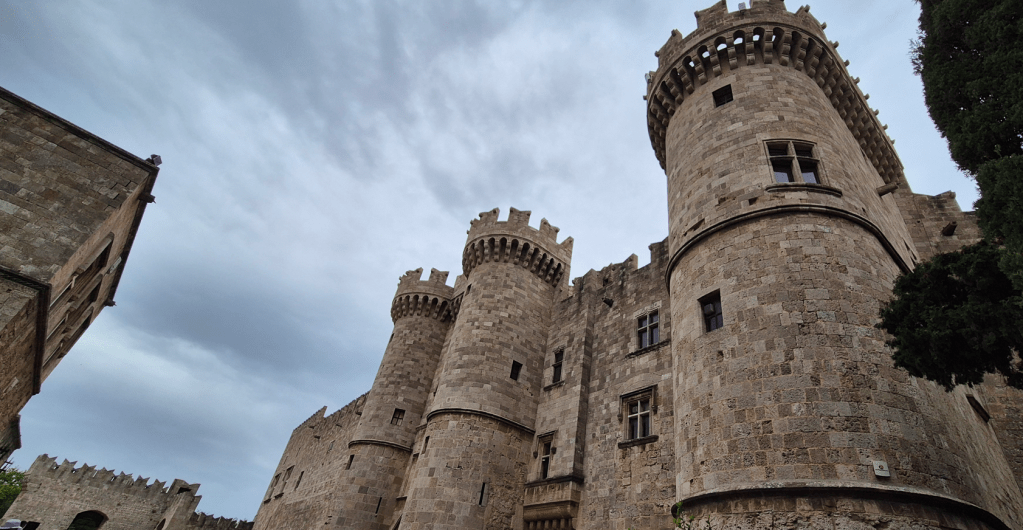
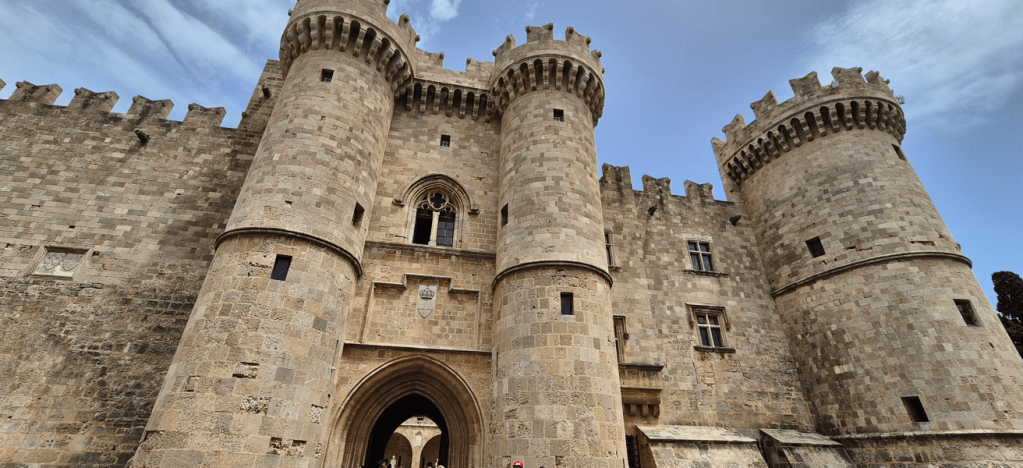
- Palace of the Grand Master: This imposing castle was the headquarters of the Knights of Saint John. Today, it houses a museum showcasing artifacts from Rhodes’ long history and offers stunning views from its towers.
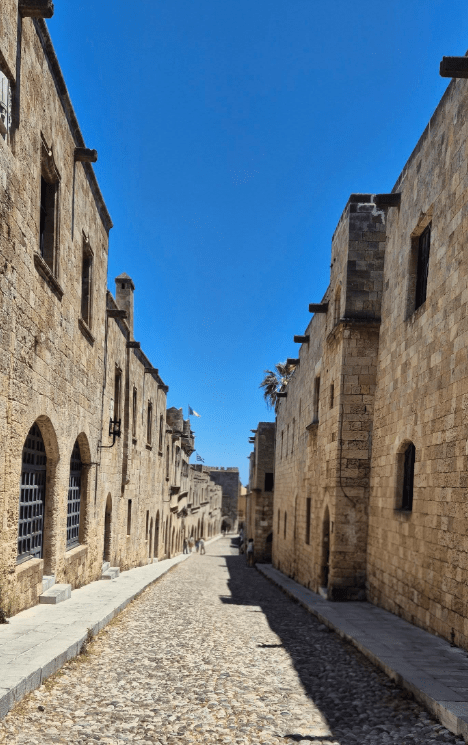
- Street of the Knights: One of the most famous medieval streets in Europe, it connects the Palace to the city’s old hospital and is lined with historic inns once used by knights from different countries.
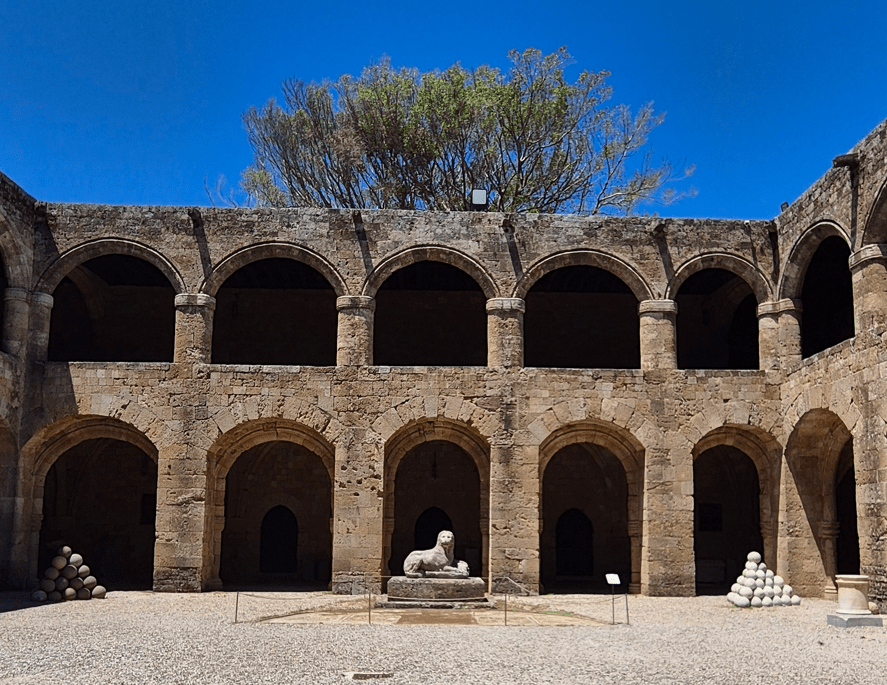
- Archaeological Museum of Rhodes: Located in the old hospital of the Knights, the museum features a fascinating collection of ancient Greek and Roman artifacts, mosaics, and sculptures.
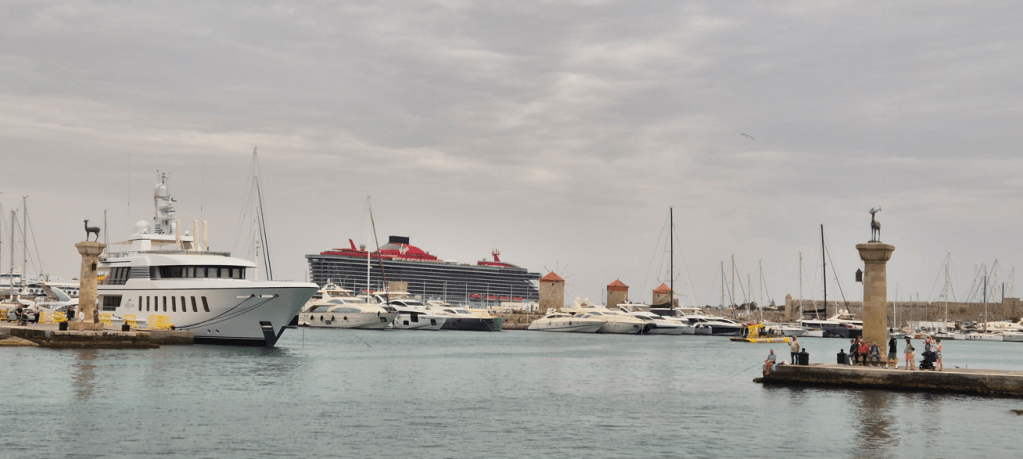
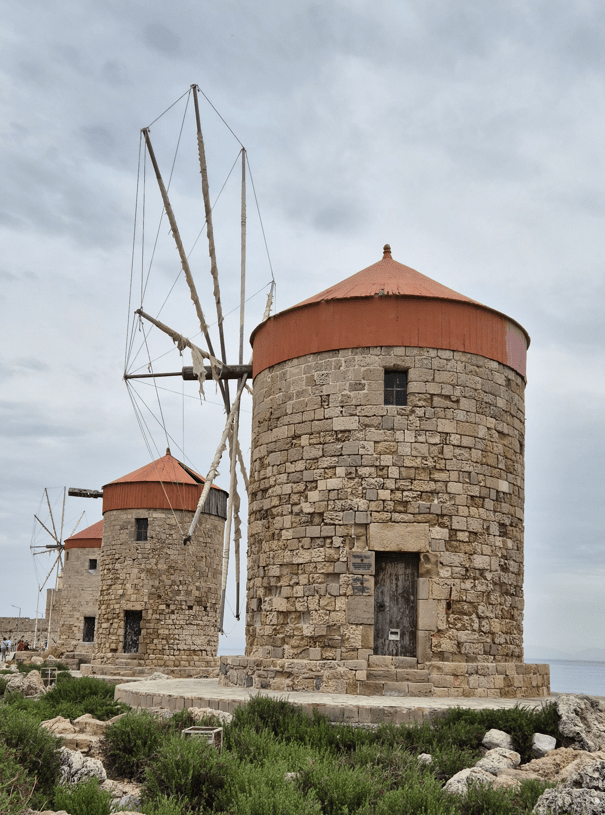
- Mandraki Harbor: Historically the site where the Colossus stood, Mandraki Harbor is now a scenic spot dotted with windmills and statues of deer, the island’s symbol. It’s a great starting point for exploring local shops, cafes, and the waterfront.
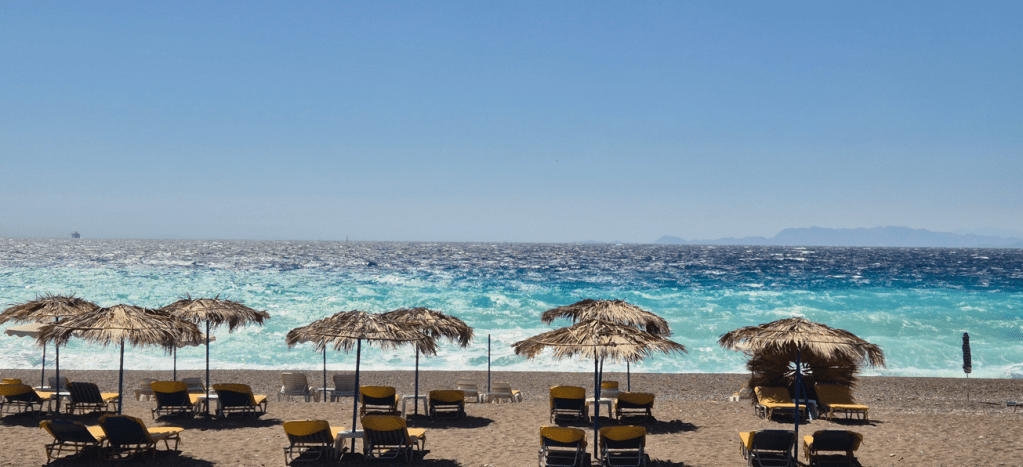
- Elli Beach: For those seeking relaxation, Elli Beach offers crystal-clear waters and is just a short walk from the historic center, blending leisure with sightseeing. Be careful, as it might be very windy with high waves and strong currents, just like the day I took this picture. That’s why it’s empty
- Hippocrate’s Square: Located very close to the harbour, it is a lively place surrounded by tavernas and shops (too many people in the photos and couldn’t remove them all, but you can look it up)
- The ruins of Church of the Virgin Mary of the Burgh: One of the first cathedrals built and the oldest church in Rhodes that still stands. It was built in the early 14th century by the Knights in the Gothic architectural style, in contrast with the Byzantine style used in Orthodox churches. Today, the church is ruined and only the outer walls still remain.
- The Windmills and the promenade: Take a walk on the promenade surrounding the Mandraki Port while enjoying an ice cream or a freddo.
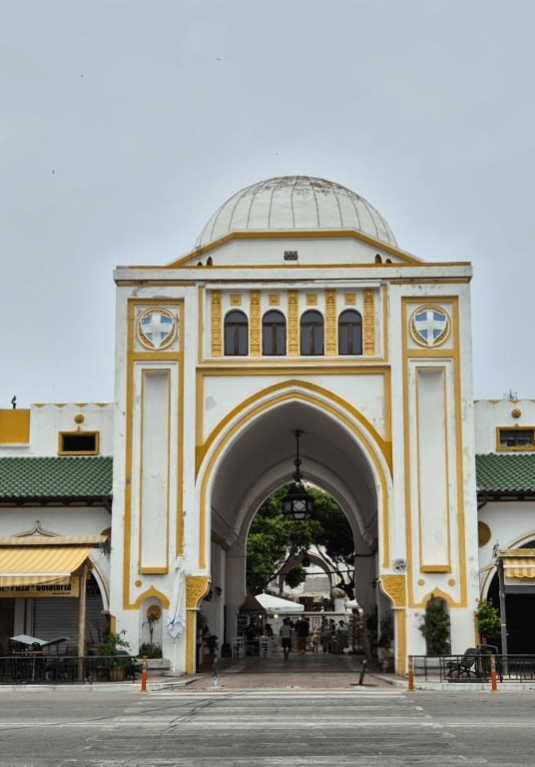
- Nea Agora: a 7 sided building with an impressive entrance that once held the fish market
- The Casino: located in what used to be a luxury hotel it will impress you with its architecture. There is also a restaurant (open only during the summer months) and a beach bar and pool.
- Aquarium of Rhodes: Located at the tip of the island and surrounded by Elli Beach, it is a nice way to spend some time during the hot summer days or with children.
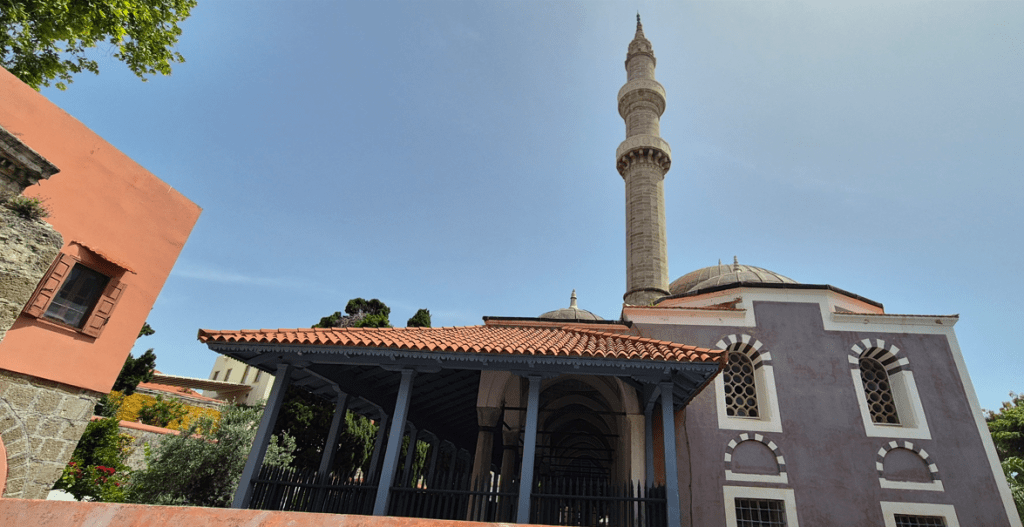
- Suleymaniye Mosque: Standing right in the heart of the Medieval Town, it is a remnant of Rhodes’ past and multicultural legacy
Good to know before you go:
- It is the largest and the administrative center of the Dodecanese region. You will also find here diplomatic missions, mostly consulates
- The Medieval Town (the one located between the walls) is a UNESCO World Heritage Site, hence strict preservation measures are in place. Cars are NOT allowed (only those of the residents and those that supply the tavernas and collect the garbage and only during the night). There are some public parkings near the entrance gates, but I strongly recommend to arrive here by bus, as parking spaces are limited.
- There is a public toilet close to the entrance in the Medieval Town, on Orpheus Streen, the entry fee is 50 eurocents (insert coin type of door) and it is very clean
- This is the central bus station for public transport. You will change here if you need to get from Ialyssos to Faliraki or Lindos, for example
- Wear confortable shoes as the alleys in the Medieval Town are covered with pebbles or cobblestone
- It is extremely crowded in the summer months, as 4-6 cruise ships dock here daily and is a hub for one of Europe’s largest cruise companies.
- As it is surrounded by a large beach, there are a lot of hotel options here
- Visiting the Medieval Town is free, but you will have to purchase a ticket for Grandmaster’s Palace, The Archaeological Museum and other indoor museums
- The Medieval Town is full of souvenir and artisan shops, at affordable prices. Also, you will find a lot of tavernas and family owned restaurants here and you can pay by card almost everywhere
- The land you see in the distance is the Turkish coastline
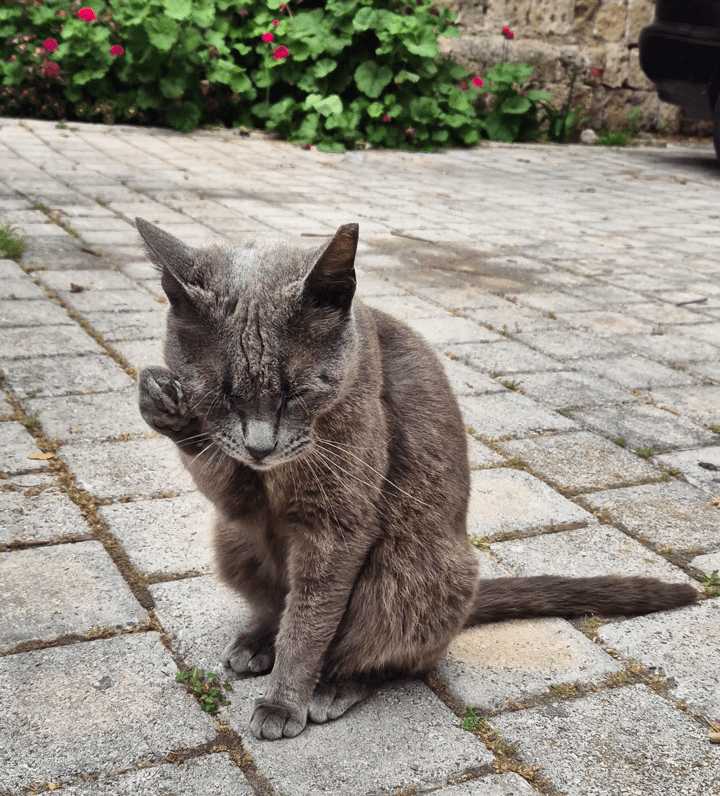
- The real rulers, as on almost all Greek islands, are the… you guessed, cats! They are everywhere: at tavernas, archaeological sites, churches, minding their cat business. Please read my article about cats before feeding or petting them. I know it is about cats in Crete, but same rules apply everywhere. I chose this picture because it looks exactly like my ball of fur.
 Skyline Stories
[…] I have already mentioned these landmarks as must see in Rhodes Town, I wanted to do them justice and detail each of them, as they are impressive and unique in both […]
LikeLike