
Nestled off the western coast of mainland Greece, Lefkada is an island renowned for its natural beauty, vibrant culture, and rich history. Connected to the mainland by a floating bridge, Lefkada stands out among the Ionian Islands not only for its breathtaking beaches but also for its fascinating past and significant contributions to Greek heritage.
Lefkada’s history stretches back to ancient times, when it was inhabited by the Leleges and later the Corinthians, who established the city of Lefkas around the 7th century BC. The island played an important role during the Peloponnesian War as a strategic naval base. Through the centuries, Lefkada has been ruled by Romans, Byzantines, Venetians, and Ottomans, each leaving their mark on its architecture and culture. The Venetian period, in particular, shaped Lefkada’s unique character, visible in many of its buildings and traditions.
Important landmarks:
- Agia Mavra Castle: Built in the 14th century by the Frankish ruler Giovanni Orsini, this fortress protected the island from pirate raids and invasions. Today, it stands as a testament to Lefkada’s strategic importance.
- Faneromeni Monastery: Perched on a hilltop with panoramic views, this historic monastery dates back to the 17th century and is dedicated to the island’s patron saint. It houses a museum with rare religious artifacts and icons.
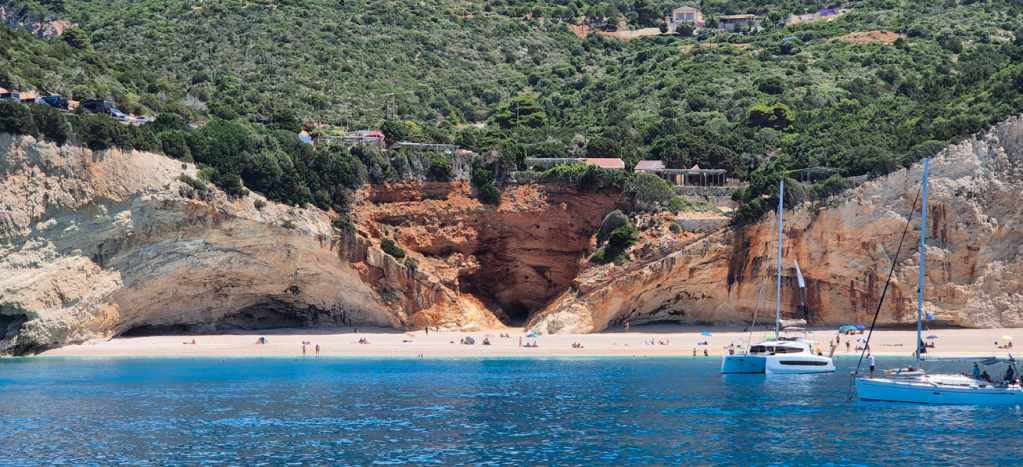
- Porto Katsiki Beach: Famous for its turquoise waters and dramatic cliffs, Porto Katsiki is considered one of the most beautiful beaches in Greece, attracting visitors from around the world.
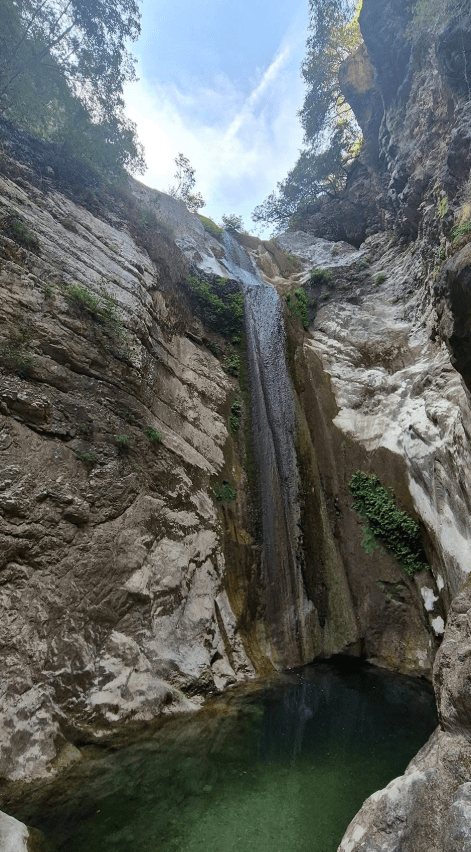
- Nydri Waterfalls: Located near the village of Nydri, these scenic waterfalls offer a refreshing escape and are a popular spot for hiking and nature lovers. Keep in mind that the island has a typical Mediterranean climate, with dry and hot summers and the waterfall starts to dry sometimes mid-May or even earlier
Lefkada has produced several distinguished figures in Greek history and culture. One of the most prominent is Aristotelis Valaoritis, a celebrated 19th-century poet whose works are deeply intertwined with the island’s identity and national pride. Another notable native is Angeliki M. Hatzimichali, an influential folklorist and ethnologist who contributed to the preservation of Greek folk traditions.
Good to know before you go:
- The airport that serves Lefkada is called Aktion and is located between Preveza and Aktion, about 23 km from the island.
- From a geographical perspective, Lefkada is an island, but being very close to the mainland it is connected by a mobile bridge. This means that when ships leave the main port from Lefkada town, this bridge will move (pretty similar to London Bridge). Of course, there is a fixed schedule when this happens, so that it doesn’t disrupt the road traffic.
- It was once attached to mainland by an isthmus, however the Corinthians dug a canal in the 7th century BC and transformed it into an island.
- In Greek it also called Lefkás (Λευκάς) which means “white”. The island’s cliffs and some famous beaches are white
- The capital city and the largest is Lefkada town, situated in the north of the island. This is also the main port and the central bus station
- Public transportation is served by KTEL, almost all buses leave and from Lefkada Town. However, their number is limited and the most frequent buses are on the eastern coast, from Nydri – Lygia – Nikiana to Lefkada Town, as this is the most crowded and tourist area. Schedule is updated regularly on their website. The airport is served by the route to Preveza.
- You can get there very easily by car, as there is no ferry crossing. Renting a car is also recommended, but parking spaces are limited and some towns have pedestrian only streets (such as Nydri)
- It is prone to earthquakes, and it also has some of the most dangerous beaches in Greece – Porto Katsiki, Kathisma and Egremni. Although their waters are of an incredible turquoise colour, there are very strong currents and high waves. In 2015 it was hit by a 6.5 earthquake that caused a massive landslide of one of the cliffs of Egremni beach. As the event happened in November, there were no victims and the beach was closed until 2021, when new and safer stairs have been built to facilitate access by foot. The aftermath of the landslide was visible in 2024
- Lefkada Town has been almost completely rebuilt after a strong earthquake in the 1950s and the architecture follows an anti-earthquake design and structure
- It is linked with Homer’s Odyssey
- You can take regular ferries (also for cars) to nearby islands such as Kefalonia, Ithaca and Meganisi. There are no ferry connections to Corfu
- In the eastern part there are 2 private islands:
- Scorpios – which belongs to the Onassis family; however, you can swim at Jackie Onassis beach if you go by boat (private or day trip)
- Madouri – owned by Valaoritis’ descendants
- It is a popular destination for windsurfing
- Sandy beaches are very few, so water shoes are a must.
With its captivating blend of history, stunning landscapes, and vibrant local culture, Lefkada invites travelers to experience a truly authentic slice of Greece. Whether exploring ancient castles, relaxing on pristine beaches, or learning about the island’s heritage, visitors are sure to leave with unforgettable memories.
I will detail in another post some of the must see and do things in Lefkada. I hope it helps you plan your vacation and enjoy your time on this beautiful island.
 Skyline Stories