
Although kind of sheltered from natural disasters, such as Medicanes (hurricanes that form in the Mediterranean Sea), massive wildfires or floodings, Crete is prone to earthquakes ☹.
I am from a country with seismic activity and my city is experiencing earthquakes up to 5 degrees on Richter scale quite often. Ten years before I was born, on the 4th of March 1977, a 7.4 earthquake shook the entire Balkan area, its epicenter in Vrancea county, Romania. Bucharest was severely affected, with many buildings being destroyed. It is very scary to be shaken in the middle of the night, when you are sleeping and you don’t realize what is going on.
Why is Crete prone to earthquakes? Well, it resides at the joint of two major tectonic plates, African and Eurasian, more precisely the Aegean Sea Plate. The tectonic plates are floating on Earth’s asthenosphere and they have been moving around for the past 3-4 billion years. When two tectonic plates meet, the most common geographical form is a volcano (submerged or above sea level). This is why Santorini is a volcanic island, Etna erupts almost every year, Vesuvius is a mega-volcano, Iceland’s volcanoes erupt every year and the Pacific Coasts are experiencing high scale earthquakes (Japan, US West Coast, Central America, Chile and Peru).

Crete is not a volcanic island, otherwise it would have had black sand beaches (like in Santorini, a result of eroded cold lava), volcano shaped mountains and other characteristics of a volcanic area. Being at the submergence of the tectonic plates, it has appeared in the Aegean Sea through uplift process. Also, its mountains contain limestone. You can tell because of the famous caves around the island (Melidoni, Dikteon Andron), which have stalactites and stalagmites and the gorges, a trademark of this type of rock. The soil is of reddish colour, as it is rich in iron.
The African plate is subducting under the Aegean Sea Plate around 40mm/year, causing shallow earthquakes. Most of them are in the sea, with a depth average of 25km.
7 major earthquakes have been recorded in Crete:
· 21st of July 365 – 8.5 or higher
· 8th of August 1303 – 8 – followed by tsunami, it caused severe damage and loss of life in Crete and Alexandria, Egypt. It badly damaged the Lighthouse of Alexandria
· 9th of March 1630
· 16th of February 1810 – 7.5 – caused great destruction in Heraklion and it was felt from central Italy to Syria. Caused damage from Malta to Northern Egypt
· 12th of October 1856 – 7.7-8.3, at 2:25 am local time, lasted 2 minutes. It was felt from Sicily to Middle East, where severe damage and human losses were reported. It collapsed the Ghajn Hadid Tower from Malta, destroyed buildings and killed several people in Cairo. Heraklion was almost destroyed, with only 18 or 40 houses left standing, out of 3600. 538 Cretans were killed and 637 injured. The earthquake was categorized as extreme on Mercalli scale and it caused so much human losses as it was in the middle of the night, when people were sleeping.
· 27th of September 2021 6.0 at 8.7km depth, 6:17 am– also known as Archalochori earthquake. 1 dead and 36 injured. The largest aftershock was at 4:48 am on the 28th of September 2021, causing further damage. More than 5000 structures were destroyed, damaged or unsafe for use, including homes and schools, some damaged beyond repair.
· 12th of October 2021 – 6.4, 10km depth, Lasithi region– no, this is not a writing mistake. This happened at the 165th anniversary of the 1856 earthquake and two weeks after the Archalochori one. Town hall of Sitia suffered damage and the church of Agios Nikolaos in Xerokampos collapsed.
Even if earthquakes are pretty common in the area, it is somehow safe. Buildings have been designed to resist an earthquake up to 8 on Richter scale, they have few levels (I think the maximum is 4 or 5) and locals are well trained. The highest risk here is tsunami, but with modern technology it can be predicted and the population is immediately alerted through the emergency system (GR-Alert).
If you come from a country where this phenomenon is not that common or you never experienced an earthquake before, in case it happens remember to follow these:
1. Most important: DO NOT PANIC! Even if you will see the lamp swinging and the furniture moving, the most important thing is to keep calm!
2. Take cover under a solid structure, usually under the door frame or under a table, whichever is the closest to you. If you take cover under the table, make sure you take the “brace” position, i.e. cover your head and your chest with your arms
3. If you have children with you, first shelter them and stay with them all the time. For example, if you have 2 children, get under the table or in the door frame with them and don’t let them move until it stops
4. If you stay at upper floor, DO NOT EXIT the building!!! DO NOT TAKE the elevator or the stairs!!! This is crucial! Aftershocks are felt immediately or in a couple of minutes and they can be as powerful as the initial earthquake! Wait for 10-15 mins to make sure everything is ok and then you can exit. If you stay at ground level, exit immediately and go in an open area, as far as possible from the building.
5. If you are at the beach and you didn’t feel the shake, but you see that the sea is withdrawing fast from the shore, leave the beach immediately! This is the first sign of tsunami!
6. DO NOT turn on any light if you smell gas after the earthquake. Although almost all home appliances in Crete are electric, there might be accommodations where gas stove is installed (not so common, but possible)
7. Dial 112 (European emergency number) in case of any emergency and follow the authorities’ instructions.
8. Make sure your phone is set to receive CB (cell broadcasted) messages, as is it not enabled by default on all devices. Emergency alerts are sent from GR-Alert, which is the national public warning system. The message is sent in Greek and English and also in your native language if you are roaming, as per EU Legislation
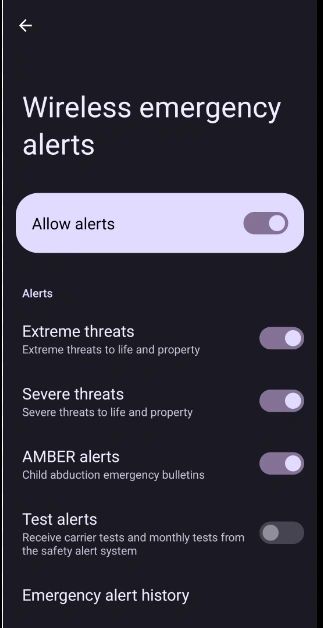
9. Follow the authorities’ instructions, have your personal belongings at hand (ID or passport, mobile phone, charger, wallet) and remember to keep calm
I strongly recommend to go the Natural History Museum of Crete, in Heraklion and participate in the earthquake simulator. The museum is located at the end of the promenade in Heraklion and it is easily accessible and spotted. Just look for the building next to a big dinosaur. In a safe environment you can experience 2 of the most powerful earthquakes in recent history and improve your knowledge about this natural phenomenon.
Stay safe!
 Skyline Stories