
If you can work remotely or you are a digital nomad, working from Crete could be on your list. I have done this and I can say it was a wonderful experience. Below are my tips & tricks and what struggles I have encountered. Some of them also apply if you just want to move to Crete for some time, not just for remote work .
I will group them based on the plan I made, but remember that sometimes things don’t happen as planned (we have a saying in my language that the calculations from home don’t match the calculations from the market). So, enjoy the read and let me know if it helped you.
1. Before you go:
a. Check your employer’s policy on working from another country. Some companies allow for a couple of weeks, some don’t allow at all (due to taxation regulations). I work in the IT industry and trust me, your devices are being tracked and the IT admin knows your whereabouts. If you are self-employed, you can skip this point
b. Check if you have the right to work in Crete. It is part of Greece and European Union, so if you are from any other country than EU, you will have to apply for the digital nomad visa. Get your information from official institutions and their websites (such as the embassy, government websites, etc) not from Facebook groups. Greece is also part of the Schengen area, so have that in mind as well, if you need the visa.
c. If you are an EU citizen, you can stay and work remotely for up to 6 months, afterwards you will have to apply for the resident permit. Check also the laws regarding taxation (consult a lawyer or an accountant)
d. Have healthcare insurance. As EU citizens, you can use your European Health Card, which is issued by your national healthcare system. It is free of charge (you only have to pay for its delivery, if you don’t go to pick it up yourself) and it covers the emergencies and other types of free treatment, only in public hospitals (you will pay what the Greek citizens pay). You can also make an insurance with a private insurance company, the best would be with direct debit (meaning that they will pay directly the hospital or the clinic, not you and then get the money back)
e. Check with your mobile operator the terms or roaming usage. Within EU, there is no cost for roaming, but some big operators, such as Orange or Vodafone, have some terms. For example, my home operator is Orange. In my monthly subscription I have 25GB of roaming included. However, they call it “reasonable use” and they meter the calls and data usage in roaming. At some point I received a notification from them that I used more data in roaming than at home in the past 4 months and from that moment on I was charged for any MB I used. Either buy a local sim or an e-SIM
f. If you are undergoing long-term treatment for a specific condition, make sure you have enough medication with you. Also, check if the medicine (or the main active substance) is allowed in Greece – for example, codeine is banned. Bring a copy of your prescription and ask your physician for substitutes, as the name varies from country to country
2. What you need:
a. A laptop, a mobile device and their chargers, of course
b. A power bank (preferably over 10.000 mAh)
c. A spare mobile phone that you can use for hotspot
d. Noise cancelling headphones – trust me, they will save your life
3. Accommodation:
a. Look for accommodation either in the 4 major cities (Heraklion, Chania, Rethymno, Agios Nikolaos) or close to them. The main reasons are: the wi-fi and phone coverage (you’ll see why) and most important, public transportation. Also, these are the cities with big hospitals, so you might want to consider that as well.
b. If it’s under 3 months, it’s considered short term rental. You have a lot of options on websites such as Spitogatos or Spiti24 (here you can find listings directly from the owner as well, not only real estate advertisings). Airbnb is also a solution for a month or two, usually there is discount for long term stays. There are Facebook groups dedicated to digital nomads and you can find available apartments there as well and you can contact the owner directly
c. If you own a car or plan to rent one, check if the property offers free parking.
d. If you choose an accommodation from the websites I mentioned at point b. check if they have aircon and if utility bills are covered or not in the rent price (electricity, internet, cable TV, heating, shared expenses – usually building shared expenses)
e. Remote places are idyllic, but if you don’t have a car and there is only one bus/day, it will be very difficult to move around. One example is Margarites, where there are only 2 buses/day to and from Rethymno and the slot between them is 50 minutes: it arrives at 15:55 from Rethymno and goes back at 16:50. So you cannot go to Rethymno without a night spent there, as there is no bus in the morning, only the one in the afternoon.
4. Utilities:
a. Wi-fi – usually, almost all places listed on booking and Airbnb will offer free wi-fi. If it’s not mentioned, then you either have to pay for it or there is no wi-fi
b. You can buy a local SIM card – around 20E or so – or use e-SIM if your phone has this option for mobile hotspot or to avoid huge roaming costs
c. Heating is not a common thing in Crete, it’s very expensive. You can use AC for the winter months
d. Electricity – more and more people use solar panels for electricity. But those who don’t, will tell you that you have to pay the bill. Electricity is very expensive in Greece (we paid 0.8E/kWh)
e. Piped gas (for domestic use, such as stoves) is not common, some use gas tanks that they buy from gas stations or big supermarkets. Almost all appliances are electric (stove and oven, for example)
5. Transportation:
a. The best would be to come to Crete by your own car, if you can, but no more than 6 months.
b. You can find long-term car rentals, especially in the winter months, but I couldn’t find anything lower than 15E/day.
c. If you can, reach out to your host and ask if they have a spare car that they can share. It’s worth a try 😊
d. You can use public transport (that’s why I mentioned to look for accommodation near the big cities) and rent a car for the weekends, for example
e. Always look on the two KTEL websites (www.ktelherlas.gr for Heraklion-Lasithi and www.e-ktel.com for Chania-Rethymno), as the bus schedule changes every month and public holidays.
6. Food and drinks:
a. You can either buy your food from local supermarkets or markets (especially fruits and vegetables from local producers) or you can go out for all three meals
b. You will find coffee shops at every corner and for 4E, for example, you can have a coffee and a snack – sandwich, donut, croissant or pastry pies: spanakopita, tiropita, etc
c. Tap water is safe for washing, brushing your teeth and washing food. Unless stated otherwise, it is also safe for drinking. I chose bottled water, less than 2E for a 6 pack of 1.5l bottles
d. If you have dietary restrictions, follow a certain food type (halal or kosher, for example) or you know you have allergies, inform the waiters. If you eat halal or kosher, look for specific restaurants and ask for recommendations. Remember that in this area we eat pork and that the majority is orthodox.
7. Prices:
I will include basic shopping and things you might need on a daily base. Prices I mention are an average, they vary from shop to shop and of course based on inflation, time of the year, etc.
a. Gasoline – around 2E, Diesel around 1.6E. price depends on the gas station
b. Bread and toast – between 1E and 4E. we are talking about basic bread, not gluten free or bio
c. Water – from 0.15E to 0.5E for a 0.5 bottle and from 0.3E to 1.5E for 1.5l bottle. A 6 pack of 1.5l bottles is around 1.5E. Here we talk about still water. Sparkling water is more expensive
d. Juice – from 0.3E per 250ml and 1E per liter
e. Dairy products: milk – from 1E/liter, yoghurt – from 0.5E, feta cheese – from 2.5E per 200g. Vegan milk starts from 2.5E/1l
f. Fresh vegetables, price per kilo: tomatoes – 2E, cucumbers – 1.7E, potatoes – 1E, peppers – 2E, onion – 0.5E, aubergines – 2.5E
g. Fresh fruits, price per kilo: lemons – 1E, oranges – 1E, apples – 1.5-2E, bananas – 1.5, pineapple – 1.5E, pomegranate – 3E, avocado – 4E
h. Eggs – 2E/6-pack, butter – 2.5E, fresh filo – 4E, salami – 2E, frozen vegetables – from 1.5E, frozen seafood and fish – from 6E, fresh fish – from 8E/kg, fresh sea food – from 8E/kilo, beef – from 10E/kilo, pork – from 6E/kilo, chicken – from 6E/kilo, turkey – from 5E/kilo, lamb – from 10E/kilo
i. Flour – from 1E/kilo, sugar – from 1E/kilo, pasta – from 0.6E/500g, canned food – from 0.7E/can, sunflower oil – from 1.5E/l, olive oil – from 9.5E/l (yes, it got very expensive this year due to low olive harvest), spices – from 0.3E/bag, vinegar – from 0.7E/400ml, rice – from 0.8E/500g
j. Wine – from 2E/500ml, beer – from 0.6/330ml or 3.5E 6pack of 0.33 or 4×0.5.
k. Toilet paper – from 2E, kitchen rolls – from 2E, napkins – from 0.5E, garbage bags – from 0.6E (remember you will need a lot of these for the bathroom bin)
l. Sanitary pads – from 1.75E, tampons – from 2E, diapers – from 8E
m. Detergent (pods) – from 6E, dish soap – from 1E, dish sponges – from 1E
n. Shampoo – from 2E, conditioner – from 2E, liquid hand soap – from 1.5E, shower gel – from 1.5E, toothpaste – from 1E, toothbrush – from 1.5E, nail polish remover – from 1E, deodorant from 2.5E
o. Cigarettes – from 3.9E/pack, Heets and Terrea – 4E. note that you won’t find many choices, so you will have to get used to local stuff, after you finish your stash.
Some other things to consider:
· You can find almost everything at the grocery store or at the local periptero (or kiosk)
· Hygiene pads and tampons can be found easily, at pharmacies, supermarkets or kiosks. I was shocked that they were cheaper than in my home country
· Bottled water is very cheap, price is regulated by law
· You can find Lidl supermarkets, usually in the outskirts of major cities, downside is that they are not easily reachable by bus
· If you need small things in the kitchen (such as cooking or baking tools) or school supplies, the best place to go is Jumbo. They have a lot of things you might not even need, but end up buying them. The stores can be found outside the main cities (the one in Heraklion even has a bus stop named Jumbo – line to Ammoudara) or you can order online
· Almost everybody speaks English (except for super remote areas)
· Pharmacists are all university graduates (either in Greece or abroad) and highly trained, so they can give you remedies for minor inconveniences such as: headaches, stomach flu, seasonal flu, sunburns, heatstroke, etc without having to see a doctor
· Doctors speak English, both private and public healthcare, especially in the tourist areas
· For dental emergencies, you will find a lot of dentists in the main cities. If you are wearing braces, you will find orthodontists’ offices as well, but they will only cover the emergencies (such as a fallen bracket) as they don’t know your history and don’t interfere with your current treatment. You can contact me for recommendations, if you need.
· Contraception pills are OTC, but remember to ask your ob-gyn for replacement, if needed
· If you have children and move to Crete during school year, you will have to enroll them in the local schools, as education is mandatory between ages 6-15. There are private schools where they are taught in English, for example.
· Save the owner’s phone number and announce them immediately in case of anything – repairs, leaks, broken pipes, clogged toilet, foul smells, electricity issues, locked door – and do not attempt to fix them by yourself. When you move in, ask them how to use the appliances (for example the stove or the washing machine)
· If there are no nets at the windows, buy a mosquito repellent device. I recommend those with liquid reserve, as they don’t smell as strong as the pills.
Challenges:
Here comes the not-so-funny part ☹
· Internet speed. Greece has the lowest internet speed in Europe, with an average of 35 Mbps. It can be a real struggle if you need to attend online meetings (on Teams, Zoom or Meet)
· Power outages. If the house doesn’t have solar panels, power outages are pretty normal. And they can last for a couple of hours. No electricity, no internet connection. And depending on your laptop’s performance and battery life or the amount of work you need to do, a 3hrs power outage is not so fun ☹. They are most frequent in the summer months, especially in the morning (when people turn on the AC for the day or when the local tavernas and restaurants start their industrial appliances.
· Accommodation. Finding long term rentals from May to October is almost impossible. It is also a real challenge to find an apartment to rent for a year, as most of them are listed with availability until end of April or May. Even in the winter months is kind of difficult, as students start their studies in October and most of them are from other regions or countries (such as Erasmus students). For the summer months the best option would be Airbnb, but you will have to book your stay very early and expect very high prices, especially if it’s close to the beach. Another solution would be to reach out directly to the owners and negotiate the price, but take into consideration areas more secluded and not touristy (such as the south)
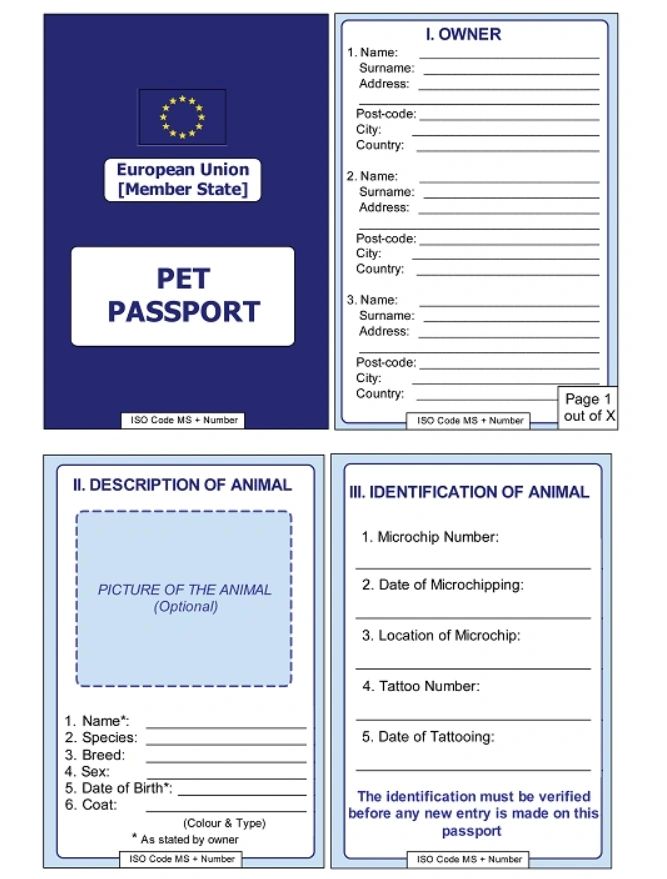
· Pets. If you have pets and you have to bring them with you, remember that you need all the necessary papers and documents, as per EU regulations. All info can be found on the European Union official website:
o Cats and dogs must have microchip
o They must have Pet Passport – issued by an authorized vet (not all can issue pet passports)
o They must have Pet Health Book – issued by a vet, where all their health records are tracked, especially vaccinations and anti-parasite treatment
o They must receive the last anti-parasite treatment (both internal and external) 10 days before their departure – to allow a second dose in case they eliminate internal parasites
o They must be vaccinated against the common diseases for their species and the vaccine must be in validity date (it is usually one year)
o The most important vaccine is the anti-rabies. Your pet is allowed to travel starting the 21st day after the shot. Actually, this is what the border police will look at (if you travel by car or from a non-Schengen EU country), as rabies is a fatal disease that can be contacted by humans as well and there is no cure for it
o If you are travelling from a non-EU country or territory, your pet must have an EU animal health certificate issued by an official State vet in the country of departure not more than 10 days before your pet arrives in the EU. The certificate is valid for travel between EU countries for 4 months from this date or until the anti-rabies vaccination expires, whichever lapses first. In addition, you should also complete and attach a written declaration to your pet’s EU animal health certificate stating that its relocation is for non-commercial reasons. This declaration is also required if your pet is travelling under the responsibility of a person authorised by you. In this case, your pet must be reunited with you within 5 days of your relocation.
· Pet friendly accommodation. First of all, they are fewer than the normal ones. When I was searching and found some in the area I wanted to stay, when I contacted the owner and told them I have a cat, they told me that they accept only dogs ☹ so I had to leave my cat at home, in the caring hands of family and friends. Main reasons provided:
o They shed more hair than dogs (especially in the summer) and it will be difficult to clean it completely. Also, cat hair allergy is much more common
o The chances of damages are more likely. You know that cats like to knock things over just for the fun of it. And use everything as a scratching post, except the expensive scratch post you buy for them. And when zoomies start… nothing is safe 😀
o They don’t have cat proof windows or doors. Meaning that they don’t have special cat nets, the balconies are open, most windows are old-style and you have to open them completely to get some fresh air, etc. In this case, the chances of losing your cat are higher.
o Unlike dogs, which are walked at specific times, in special places, if a cat escapes the house, you know they wonder around. The chances of bringing home parasites (such as fleas or even worse, ticks) are higher. An infestation is very difficult to control and get rid of
o Cat food (especially wet food, if not eaten immediately) will attract ants or cockroaches
· Water pressure and plumbing system. These were two things that I found challenging and here is why:
o In some areas, water pressure can be a real struggle, especially at higher floors, if pressure pumps are not installed or if they stop working for whatever reason. Also, some buildings have the pumps connected to the main water sources, such as shower and sinks, therefore the toilet tank will recharge very, very slowly
o Speaking of toilets, throwing paper in them is NOT a good thing to do. You will find this sign in almost all bathrooms, doesn’t matter if it’s a 5 star hotel, a Michelin star awarded restaurant or a simple house or apartment you found on booking or Airbnb. Their pipes are more narrow that anywhere in Europe (I think around 2 inches or 5cm in diameter) and they clog very easily. I know, I know ☹ I am also used to throw it in the toilet and using the bins for any type of objects that shouldn’t be thrown in there (such as feminine hygiene products, cotton swabs, wet wipes, make-up removal pads, cotton, toilet paper tubes – unless specified that they dissolve in water – cardboard, small pieces of plastic, etc).
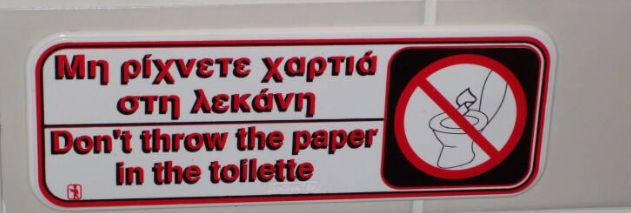
o It’s super awkward to call the owner or the hotel reception and tell them the toilet is clogged, especially when there are signs that prohibit you to do that. All the costs of calling the specialized services and de-clogging will be charged to your expenses and they are not cheap. I was always throwing the paper in the bins, just to avoid this type of situations.
· Noise. Depending on where and when you are staying in Crete, you can expect the following:
o If you stay in one of the major cities and close to city center you can expect: traffic noise (especially car horns), sirens (ambulance, firefighters, police), loud speaking, restaurant/taverna sounds (cutlery, dishes, glasses, etc), church bells (every morning and evening, 7 am and 6pm, when service is performed), loud music and parties, no matter the season
o If you stay close to the airport, especially east of Heraklion and Nea Alikarnassos, planes land and take off every 5 minutes in the summer months. The airport operates 24/7 from May to October and sometimes they can perform aircraft maintenance during the night (usually emergencies). The sound of plane engines is very loud, but I got used to it at some point
o If you stay close to the beach, you can expect late night beach parties or organized ones. Also, some beach bars turn up the volume when it comes to music during the day
o If you stay in large apartment complexes during the summer, remember your neighbours are on vacation and they don’t mind using a loudspeaker, party and have fun. Especially if there is a large group of friends and families, sometimes they stay up very late, speak loudly and enjoy life 😊
o If you stay in the rural areas, countryside sounds are normal: birds, sheep, goats, geese, turkeys, dogs and cats.
o February-March and August-September are the mating months for cats. As most of them are not sterilized and they are stray, their nightly serenades are part of the scenery. And trust me… they do have a loud voice
o Summer months are also the mating months for cicadas. The male mating sound is everywhere and it is extremely loud. I found it very annoying at first, but then got used to it and missed it when I came back home. You can listen to sample here, if you’ve never been to Greece
Sorry for the long post. I hope it helps you in planning and making the best out of your time in Crete, while earning a living. I wish I could do that again ☹
 Skyline Stories