
When I booked the trip to Vai, I saw that a visit to Toplou Monastery was also in our schedule. I am not a religious person, but I know that all monasteries in Crete have a story to tell. And that usually involves hundreds of years of existence, the Ottoman resistance, earthquakes, WW2 resistance and the list could go on. Also, they have an interesting architecture, with high defense walls, Venetian influences and some of them even Muslim elements (such as the Church of Agios Nikolaos from Chania, which has a Venetian style Bell Tower AND a minaret). One other thing I love about visiting churches and monasteries in Crete is that their inside is soooo simple, just the altar and some icons or paintings. Being baptized in the orthodox religion, I am comparing them to our churches, where the inside is so shiny, the altar looks like it was gold or silver plated and the icons of the Virgin or Christ are all covered in silver. Also, no matter how touristy they are (like Arkadi, for example), you can still feel peace inside, as if their holiness was never taken away by the massive tourist herds (something I couldn’t feel in St Peter Basilica in Rome).
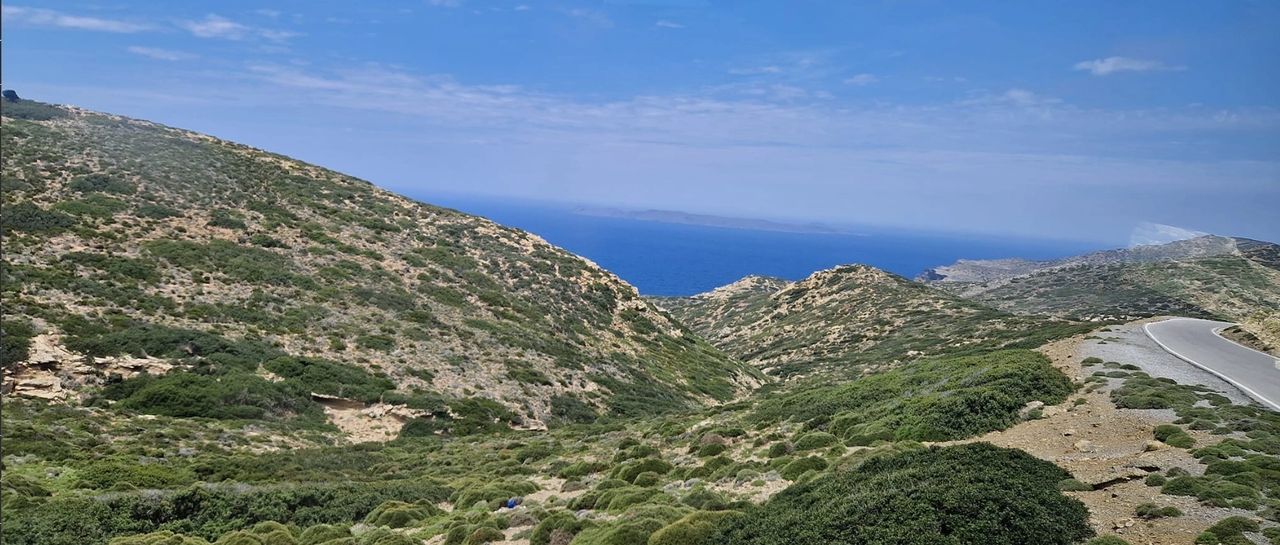
What makes Toplou even more beautiful is that it is the only human settlement, so let’s say, literally in the middle of nowhere. It is located in the Sitia Geopark, the closest city is Sitia at 15km to the west and the village of Paleokastro to the west. Otherwise, the area is completely uninhabited, the monastery being surrounded by a beautiful landscape covered in thyme and many other endemic species of plants. And of course, by goats 😊 It is located next to the gorge with the same name and you can stop by on the way to/from Vai Beach. Trust me, it will be worth it.
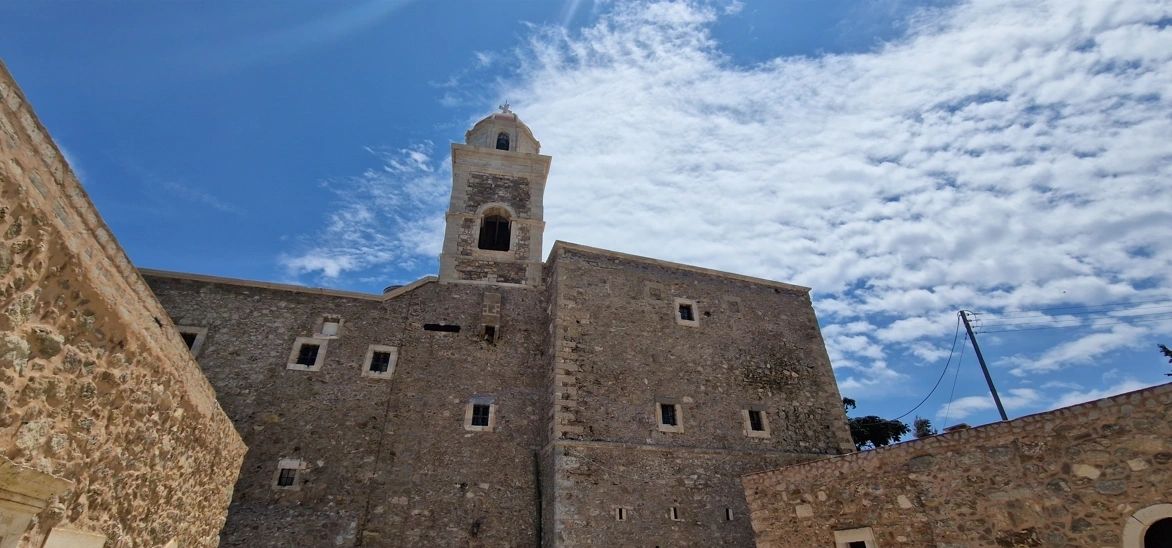
The monastery is dedicated to the Virgin Mary or Panagia and to St. John the Theologian and it dates back to the 14th century. The original church can still be seen and it was dedicated to Panagia Akrotiriani (Our Lady of the Cape).
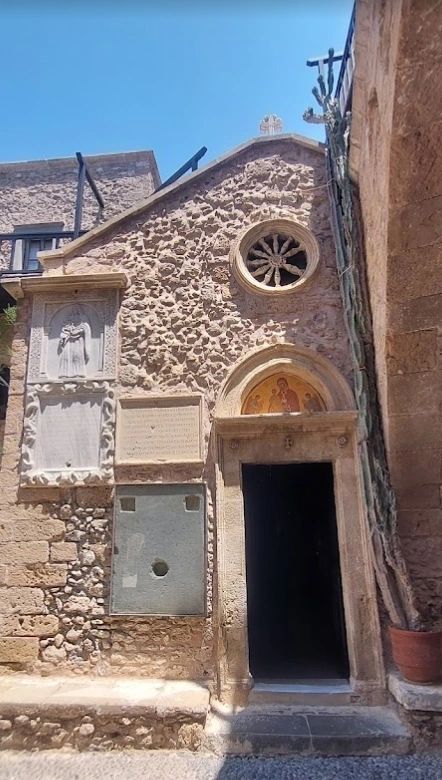
Its current name was a misrepresentation of the word “top”, a name that the Turks gave to the settlement for the cannon mounted over the door (literally meaning “place of the cannon”).

Throughout history, the monastery has been sacked by the corsairs, destroyed by an earthquake in 1612, rebuild by the Venetians, who added the defense walls to protect against raids (which were a real threat at the time). During the Ottoman rule of Crete, the monastery flourished, but it has been deserted many times, especially after the slaughtering of the monks during the Greek Revolution of Independence and it was again devastated in the Cretan revolt of 1866. During the German occupation of Crete (1941-1944), the monastery provided shelter to the resistance fighters and housed their wireless radio equipment (can be seen in the museum, if I remember correctly). When the Germans discovered the hideout, the abbot and two monks were tortured and executed.
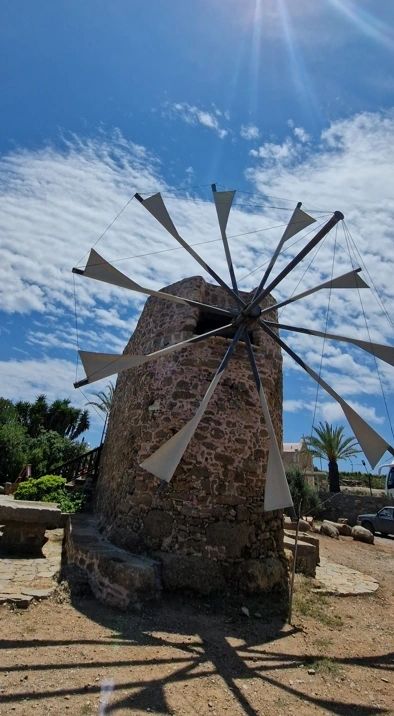
Today, the monastery can be visited (for a fee – 3 or 4 euros). Ther is a small restaurant next to it and also a winery and tasting room. The area around belongs to the monastery and it mainly used for viticulture and olive groves. The monks produce and export wine and olive oil. You can also visit the flour mill (we were there on a Sunday and it was closed) and there is free parking available.
Good to know before you go:
· This is a monastery, inhabited by monks, and a holy place. I know you might stop to visit on your way to Vai or any other beach in the area, but you have to be considerate. As a woman, make sure you are dressed in a decent manner, meaning: no super-shorts or dresses that are at most 1 cm under your butt, no transparent clothes (such as beach ponchos, for example), make sure your shoulders are covered and no deep cleavage/revealing clothes. You can cover yourself with a towel or they will give you something and the entrance, but I don’t recommend it (hygiene purposes)
· The monastery’s toilets can be used free of charge, but they are more rustic, so let’s say
· The toilet at the restaurant can be used only if you buy something from them (food, drinks or ice cream)
· The prices at the restaurant are quite high (mostly because it’s the only one in the area) but I heard people complaining that the food was not that good
· You can pay your entrance fee by cash or by card. It is recommended to have cash, as the POS might not work all the time (like it happened when I was there)
· You are NOT ALLOWED to take any photos inside the church and the museum. You can take photos outside
· I know the temptation is huge, but try not to touch the icons and the paintings inside the church. They are very old and unique.
· Keep your voice low, do not yell and if you are with children, keep a close eye on them 😊
 Skyline Stories