
Spinalonga (Σπιναλόγκα or Καλυδών – Kalydon, as it is officially named in Greek) is an island in the Elounda Bay and the second most visited place in Crete (after Knossos). The origin of the name, although it sounds Italian (spina = thorn, longa = long), has its roots in the Greek phrase στην Ελούντα (stin Elounda) which means to/from Elounda. The Venetians didn’t understand the phrase so they adapted it to Italian, after an island close to Venice which had the same name.
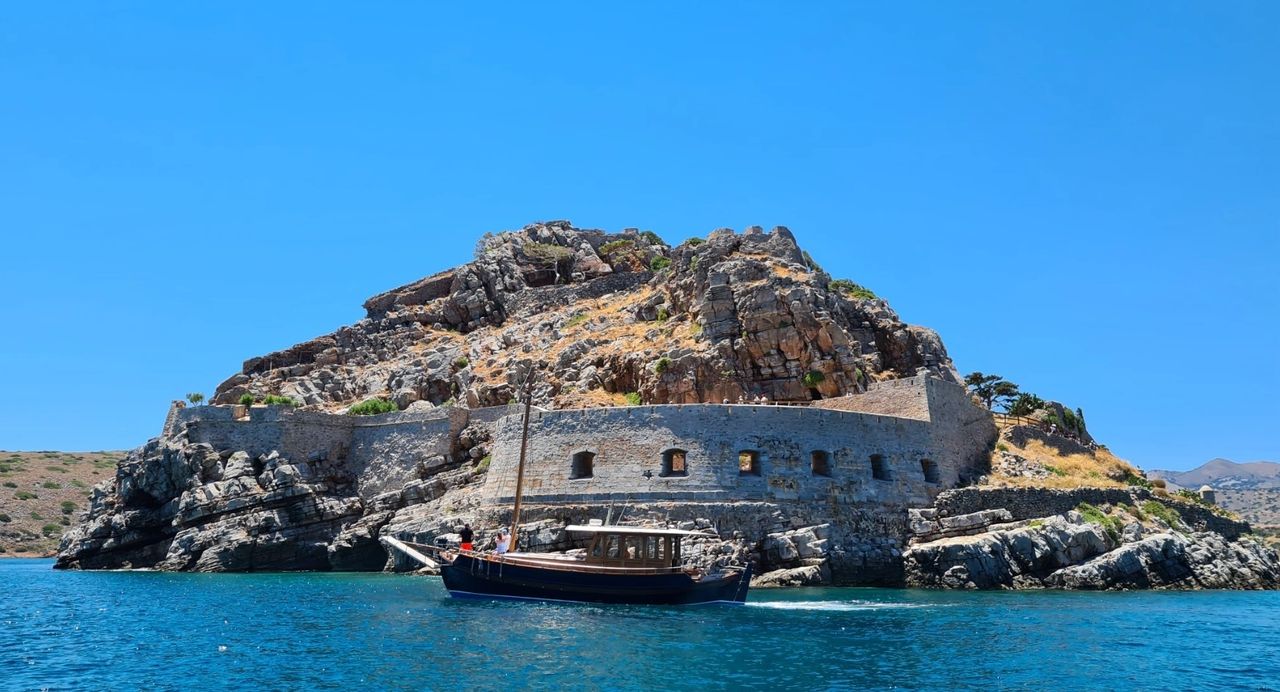
Across the centuries, the island has been under Arab, Venetian and Ottoman rule. Thanks to its geographical position and high land, it was fortified to resist against the attacks from the sea, becoming one of the most important fortresses in the Mediterranean area. At the end of the Cretan Revolution, it became a refuge place for the Ottoman families from the Mirabello Bay area. The last Turks left the island in 1903.
Since 1903 until 1957, Spinalonga became a leper colony. Leprosy was a major threat of the past centuries, as it is extremely contagious and it can be transmitted by simple skin contact (since it’s caused by bacteria that affects the skin, it can be passed from one human to another via a simple handshake, for example). Also, there was no cure for it until the mid-1900s, when antibiotic treatment proved to be effective and an official cure for leprosy was mass distributed to all those that were affected.
The island holds a lot of sadness and suffering between its walls. The sick ones, including small children, were taken by force from their homes and families and were isolated here, left without treatment or the minimum necessities for a decent life. At first, here were brought those from the area (Plaka, Elounda, Agios Nikolaos), then sick people from all over Crete and towards the final years from all over Greece. As the population of the island started to grow, they have come up with ideas on how to ease their lives. Therefore, they applied something that the Greeks invented thousands of years ago, meaning democracy 😊. So the first thing they did was to appoint a ruler, someone who could negotiate with the authorities for better conditions. The ruler was elected through a democratic process, pretty similar to our presidential elections today, they had several candidates for the position and it was elected for a short period of time (usually for a year, as their life expectancy was pretty low, given their condition). One could candidate again and be elected, if the people saw improvements during their rule.
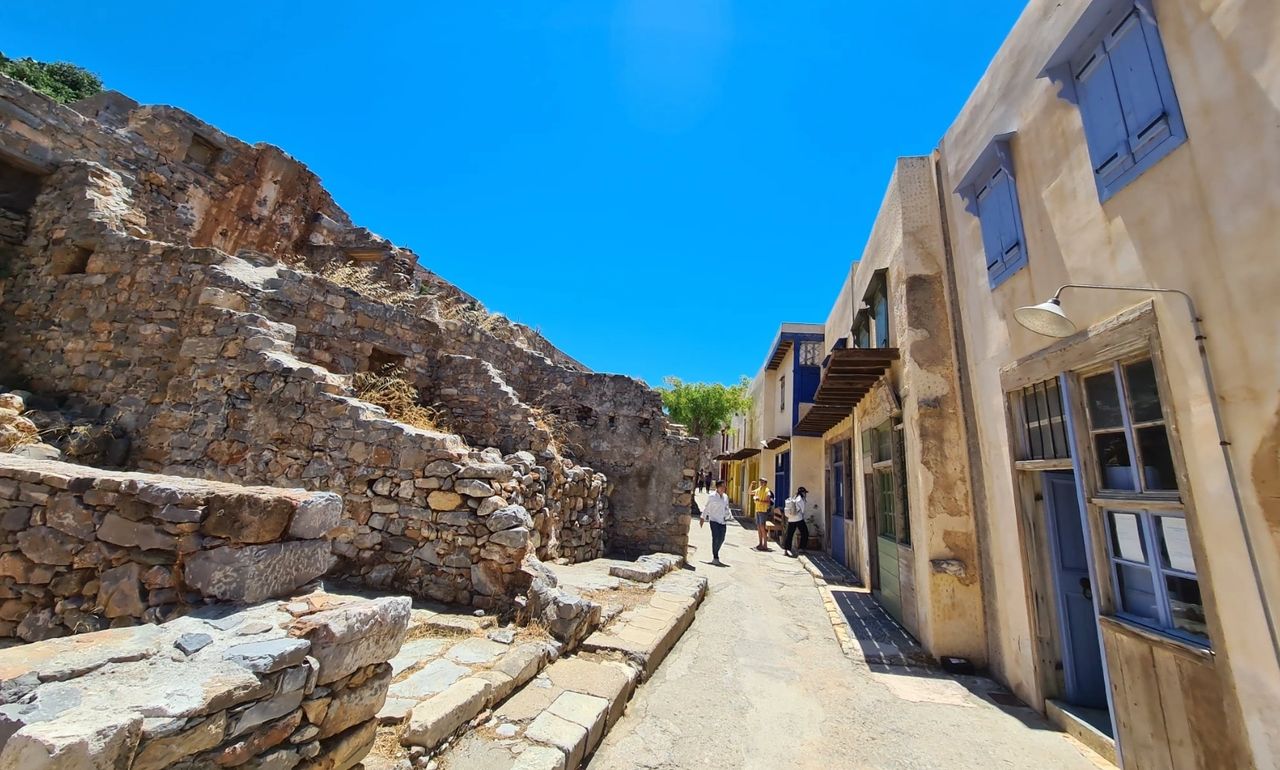
When the population started to grow and there were no available places for them to live (when someone was brought to the colony, they occupied the house of a deceased one), the ruler started to put pressure on the Greek government of the time, by threatening them that if they do not provide the colony with more money, food, medical supplies, construction materials and medical care, they would just release the sick ones back to mainland. Under this threats, the government raised the social security payments of the inhabitants (similar to a modern day allowance) and fulfilled the conditions raised by the colony. As a result, more homes have been built, a doctor was sent to the island to treat the inhabitants, a disinfection room has been set up. Also, a hospital was built, as well as a cinema, a school (as children were either brought here or they were born on the island), a church (a priest was also a permanent inhabitant), shops, cafes, a market, almost everything you would find in any village or town. The inhabitants started to live a better life and the island thrived.

During WW2, when Crete was under German occupation, the island was spared (for obvious reasons) and it was the most prosper place in entire Crete. The sad part was that German soldiers located in Plaka were instructed to shoot on sight anyone who would try to escape the island by swimming (some did this, as there were no guards, to visit their families on mainland)
After a cure was discovered and it showed results, the inhabitants were released as soon as there were no more visible signs of leprosy. The last inhabitant that left the island was the priest, in 1962. He remained to commemorate those that were buried there, as per the Orthodox tradition, at 40 days, 6 months, 1 year and 5 years after their death.
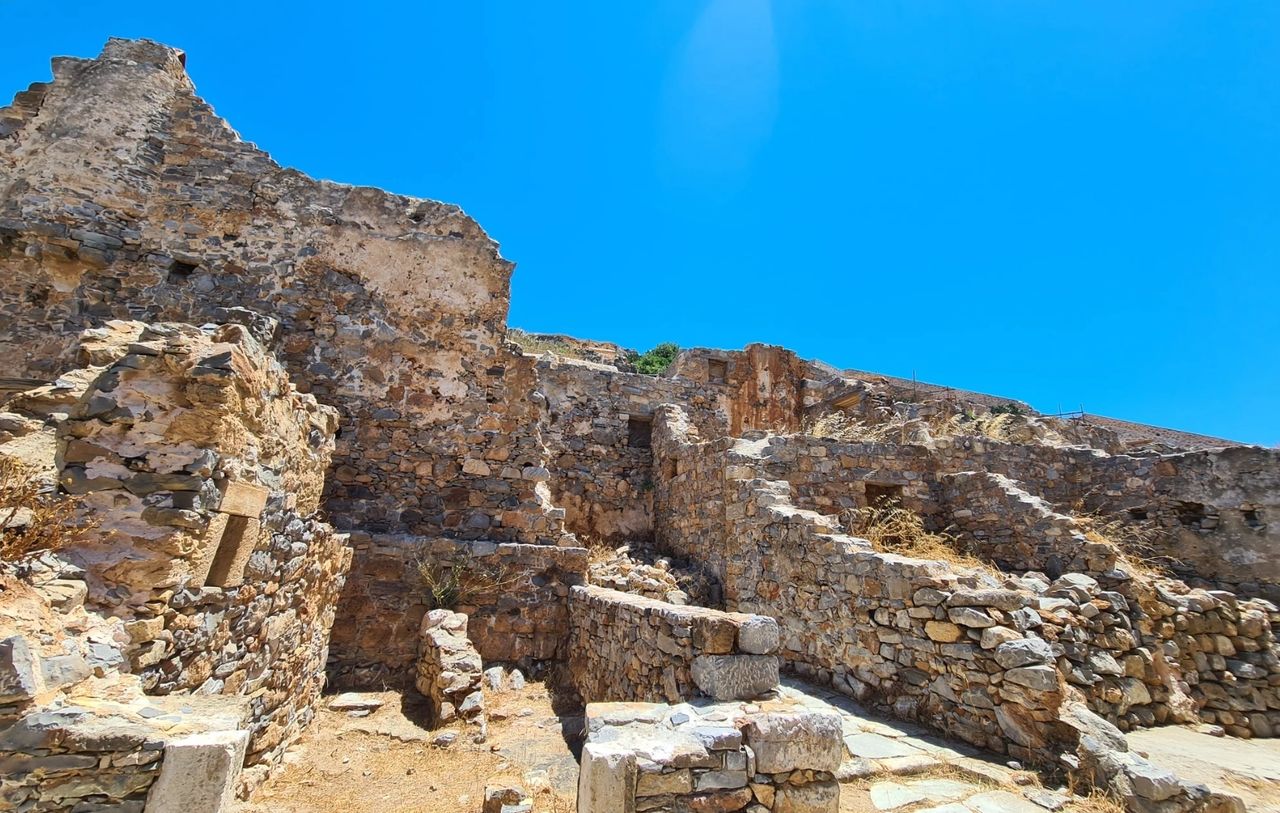
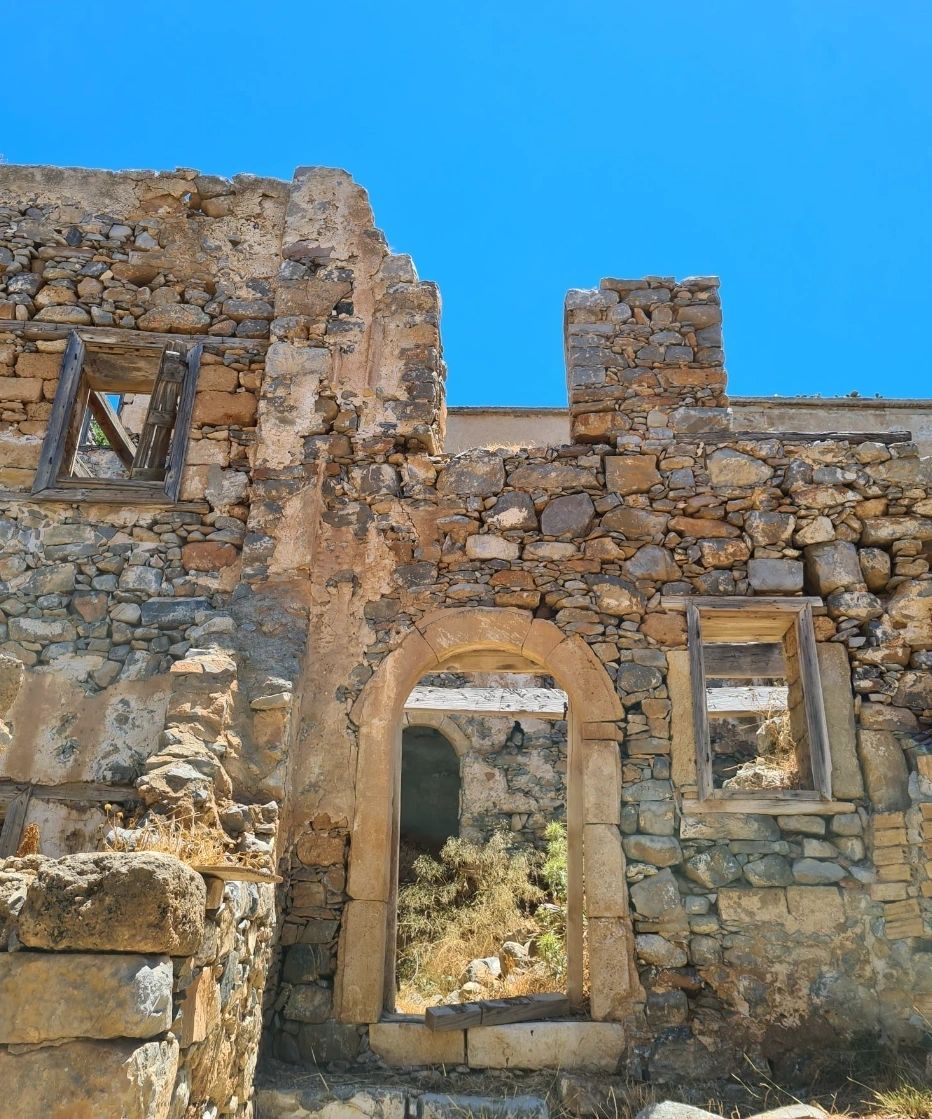
Since the colony was closed, in 1957, the island was left unkempt and the houses have been demolished by the Cretans for free building materials, therefore the ruin aspect it has today. However, it has drawn the attention of several historians and it has been restored and open to the public.
Today it can be visited, the ticket price is 8E/adult (4E reduced price). It can also be visited for free in certain days: 6th of March, 18th of April, last weekend in September, 28th of October and every 1stSunday of the month, from 1st of November until 31st of March. Of course, if the weather conditions are good 😊
How to get there: the only way to reach the island is by boat 😊 During summer season, daily boats leave the port of Agios Nikolaos or Plaka and go to Spinalonga. If I remember correctly, they depart every hour from these towns and from the island.
Or you can book an organized excursion, like I did. This will help you as the guide will provide a detailed history of the place, but it will be on the run. We only had 90 mins here and I was on a hurry, but next time I will go on my own 😊
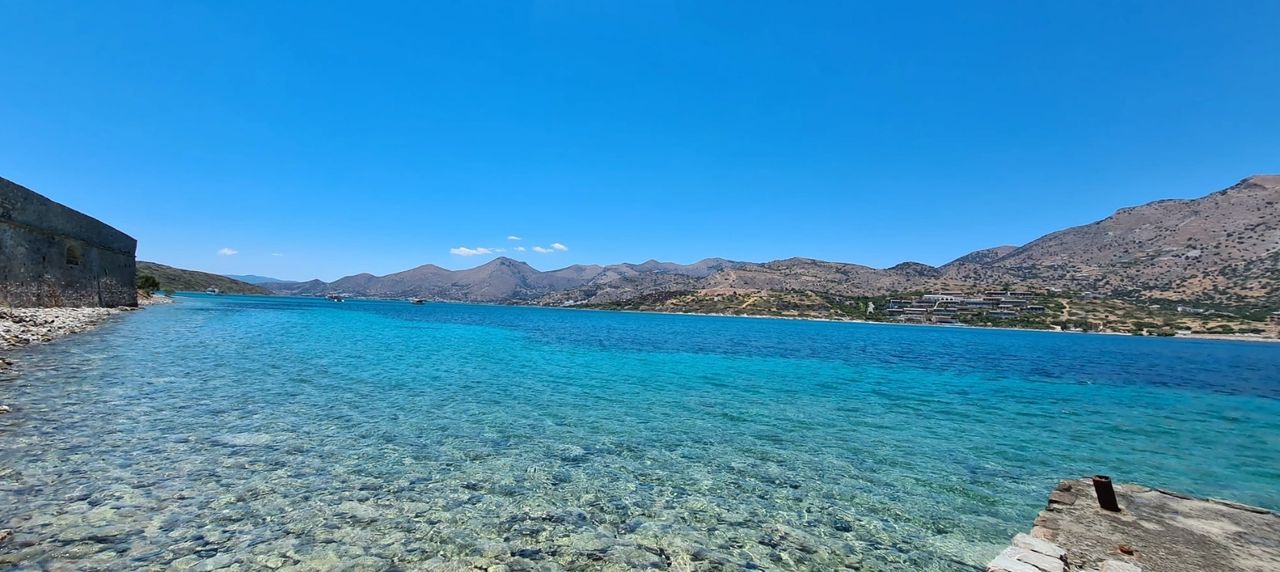
Spinalonga left me a sadness feeling. Although I was just a tourist, I was putting myself in the inhabitants’ shoes and I felt like in an open air prison. I was looking at the clear blue sky and at the calm turquoise sea and I had tears in my eyes. Also, when I reached the western part and I could see Plaka in the distance, my heart broke as I imagined those that saw the village knowing that their loved ones were still there but they would never see them again.
When I passed through Dante’s tunnel I realized how lucky some of us are that we live in the 21st century, that we have access to modern medicine, that we have all the necessary conditions for a good life. Be thankful for what you have 😊
I also recommend to read the book “The Island” by Victoria Hislop. Its main story line takes place on Spinalonga and the surrounding areas (Plaka, Elounda, Agios Nikolaos) when the island was used as a leper colony. There is also a Greek TV series made after the book, it’s called “Το νησί” (to nisi – the island) that you can find on YouTube (if you find with English subtitles)
Good to know before you go:
1. Spinalonga is an archaeological site, in discussions to be included in UNESCO World Heritage Sites. You are NOT allowed to swim or to sunbathe. Also, you are not allowed to enter the site in beachwear or high heels.
2. There are no shops inside the former colony walls. At the main entrance, right next to the ticket office, there is a small shop where you can buy water, juices, snacks or souvenirs.
3. The vising route is circular, including everything you need to see during your visit. Although the main streets have been paved, wear comfortable shoes, as it is hilly and you will have to climb at some point. Also, it is not suitable for people with mobility conditions.
4. Wear a hat and a lot of SPF cream and have sufficient water with you. There is little shadow and the sun is pretty strong. Expect high temperatures in the summer months and try to arrive as early as possible.
5. Smoking is prohibited in the site! As you can see, even in early June there is a lot of dry vegetation and the area is windy. Unless you vape or smoke heated tobacco (basically no open flame), classic cigarettes are not allowed for safety reasons!
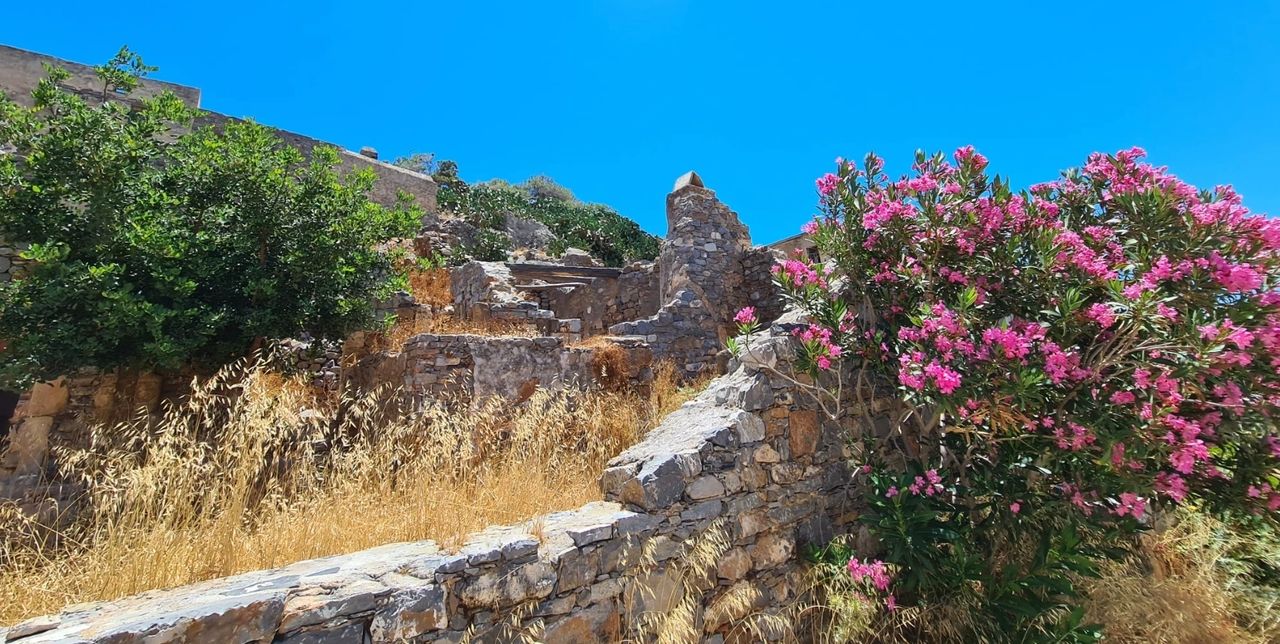
6. The site is under restoration, there will be closed areas and pay attention to the walls, as they have warning signs of possible rock falls.
7. Be considerate! It is a place with a sad history and of mourning, so please try not to pose in indecent positions for your Instagram story/reel/post. Tourists are asked to visit the place with due respect! Also, please don’t use stupid hashtags, such as “blessed”, “happy”, “instalife”, “instagood” “memories” bla bla bla as you post your pictures on Instagram.
8. Read before you go! Document yourself (this is the main purpose of this blog – to provide as much info as possible😊 ) and decide if it’s a suitable attraction for your vacation. I have seen enough complaints in the months I have stayed in Crete and also on FB groups, that I wish I had the superpower to restrict them from leaving their cave, tbh.
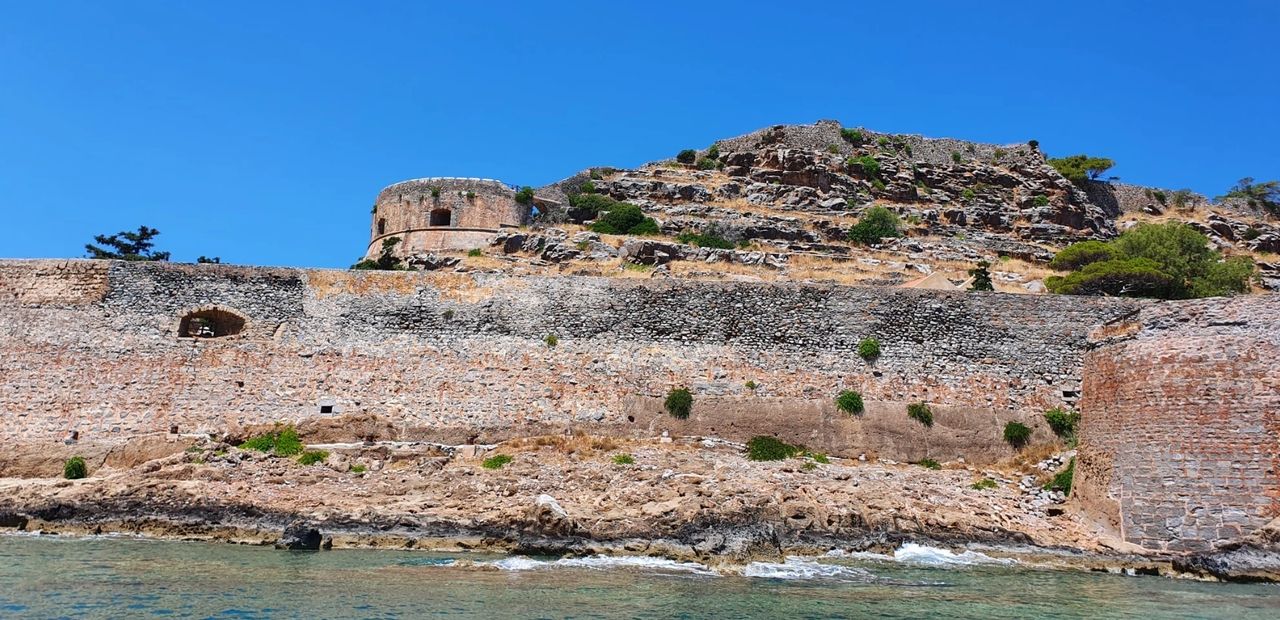
As you approach the island by boat, it will take you around it and you can capture it from different angles

The Venetian walls and fortifications still stand today. You are not allowed to climb them
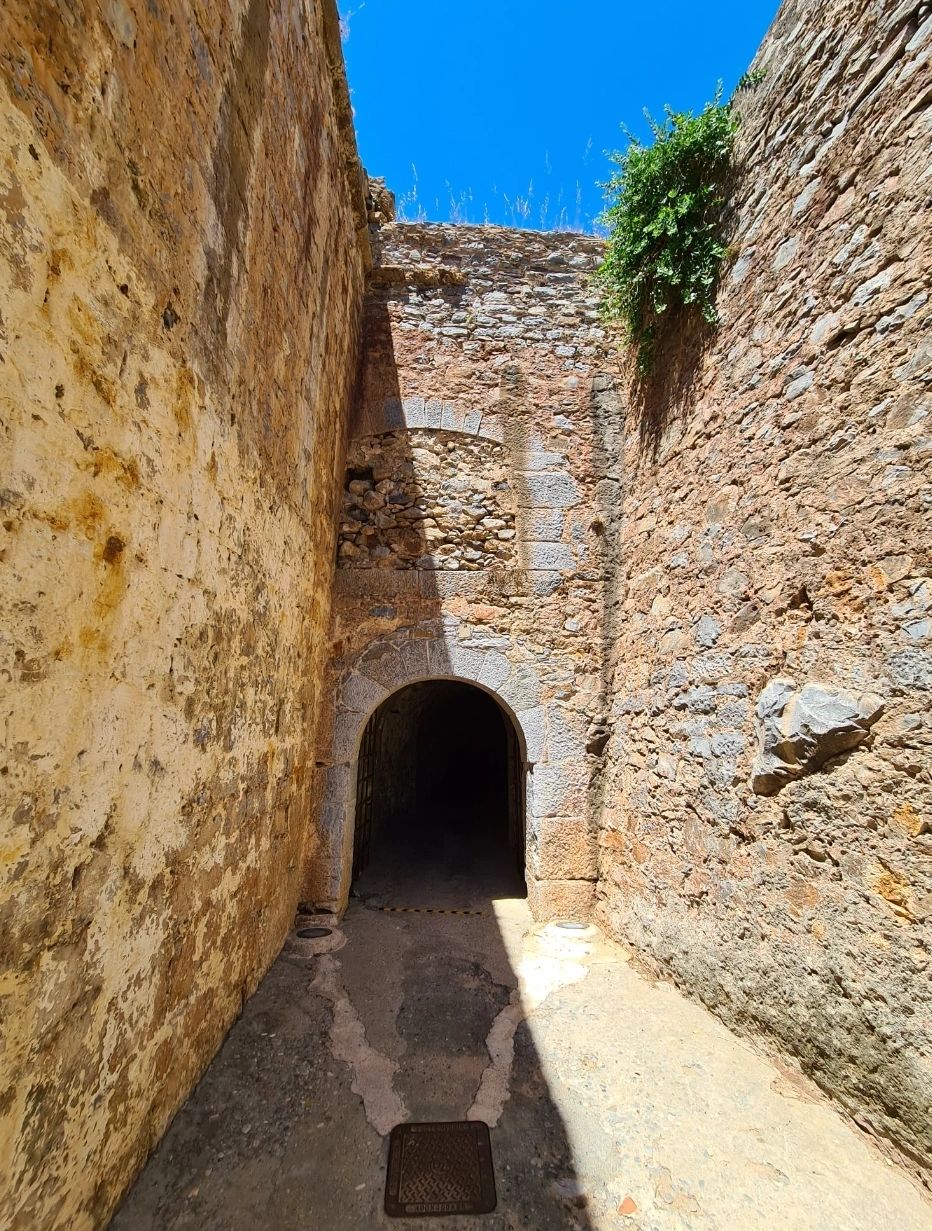
Dante’s tunnel. The main entry to the colony, named like this as the inhabitants had no idea what would expect them beyond the walls. It is a reference to Dante’s “Divina Comedia” and the inscription at Hell’s entry “Lascia ogni speranza voi ch’entrate” – “Leave all hope you who enter”. As you can see, it is not in a straight line and the light at the end of the tunnel is not visible
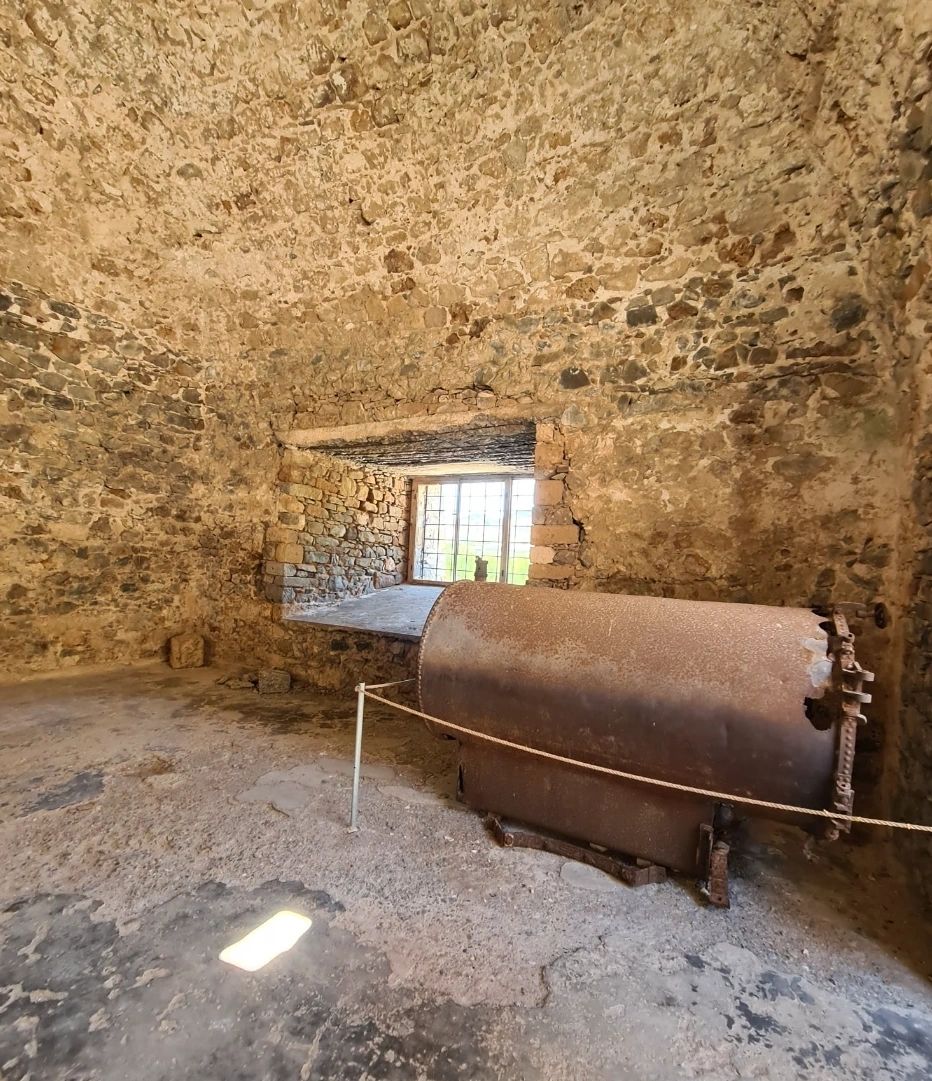
The disinfection room – it was used mainly by the doctor upon leaving the island (he was not a permanent resident)
The view of Plaka from the west bank of Spinalonga. This is where my heart broke.
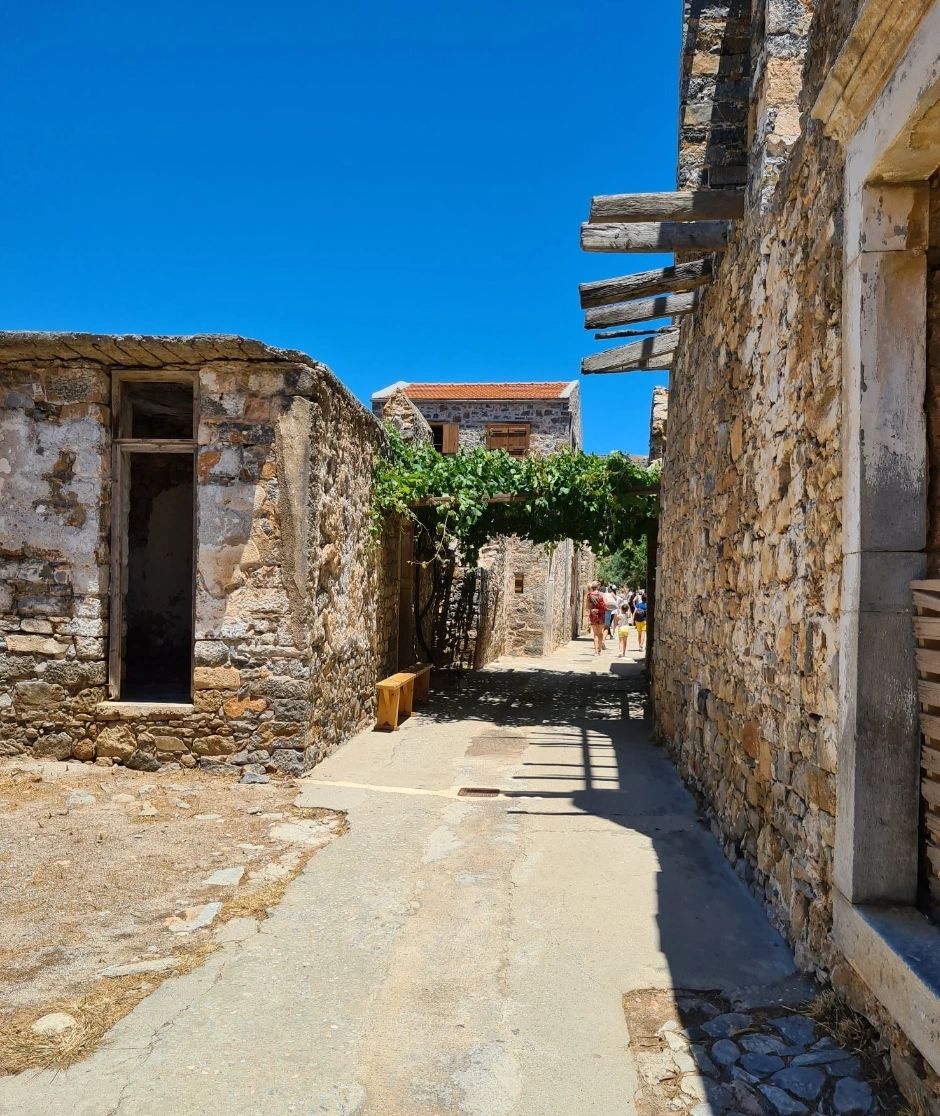
The restored main street, where shops and cafes used to be
Some places could not be restored, as they were dilapidated beyond repair
 Skyline Stories