
Spoiler alert: the yummy-est post so far. Drooling on your keyboard is not covered by any warranty, as it is considered that you spilled water.
So, food in Crete. I am part of many FB groups related to Crete, Romanian and international. And I have noticed some differences. For example, my fellow citizens and the Balkans are looking for tasty food that comes in big portions, at a small price. Meanwhile, the western Europeans or those from across the pond are just looking for traditional food, they never mention money. Well, the thing is that eastern Europe people go on vacation on a budget. They have a lot of things to pay at home (mortgage, bills, the inflation that skyrocketed in the past year, they have small incomes, etc). So they want to enjoy their holiday as much as they can, they usually choose AI or half board and they are looking for places where they can eat well, a lot and for less money. Blame it on our history ☹
There are some things you should know about food in Crete:
1. It tastes different. Even the simple χωριατική is something from another planet. That is because the ingredients they used are all local. Vegetables, fruits, olives.
2. They like to use a little bit “more” olive oil than you are used to. So expect a lot in your χωριατική
3. They do not add salt to their χωριατική. Feta is salted enough.
4. Potatoes: they are usually fried, but you can ask for boiled or baked, if you don’t want them. Also, some tavernas use frozen potatoes, some peel and cut them. It depends.
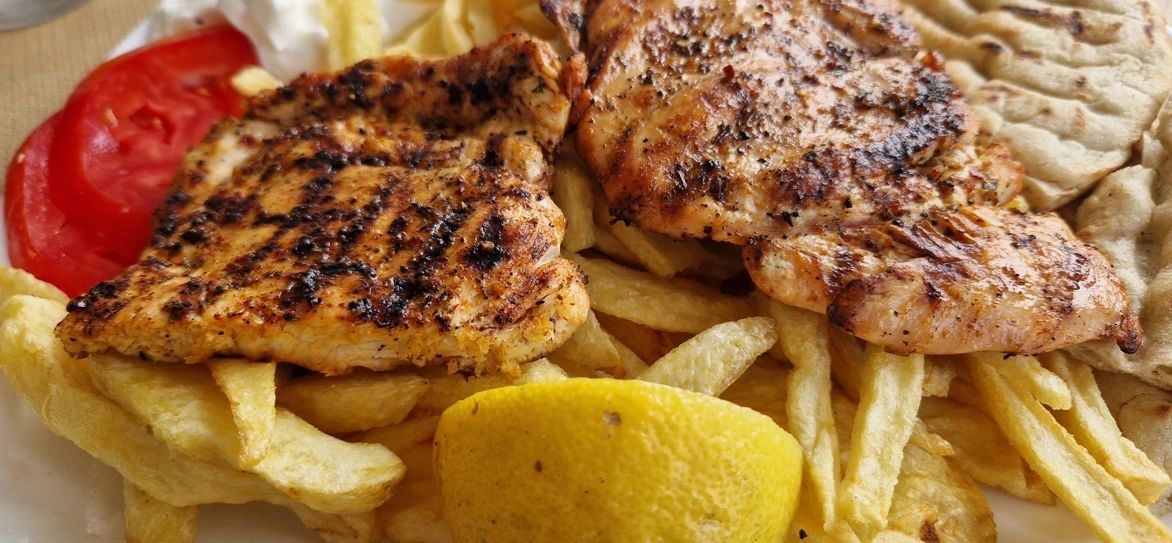
5. Seafood is safe, never had any issues (and I have a sensitive stomach). Bear in mind that in summer months you might eat frozen octopus, as its fishing is banned. Shrimps are mostly King Prawns, delicious.
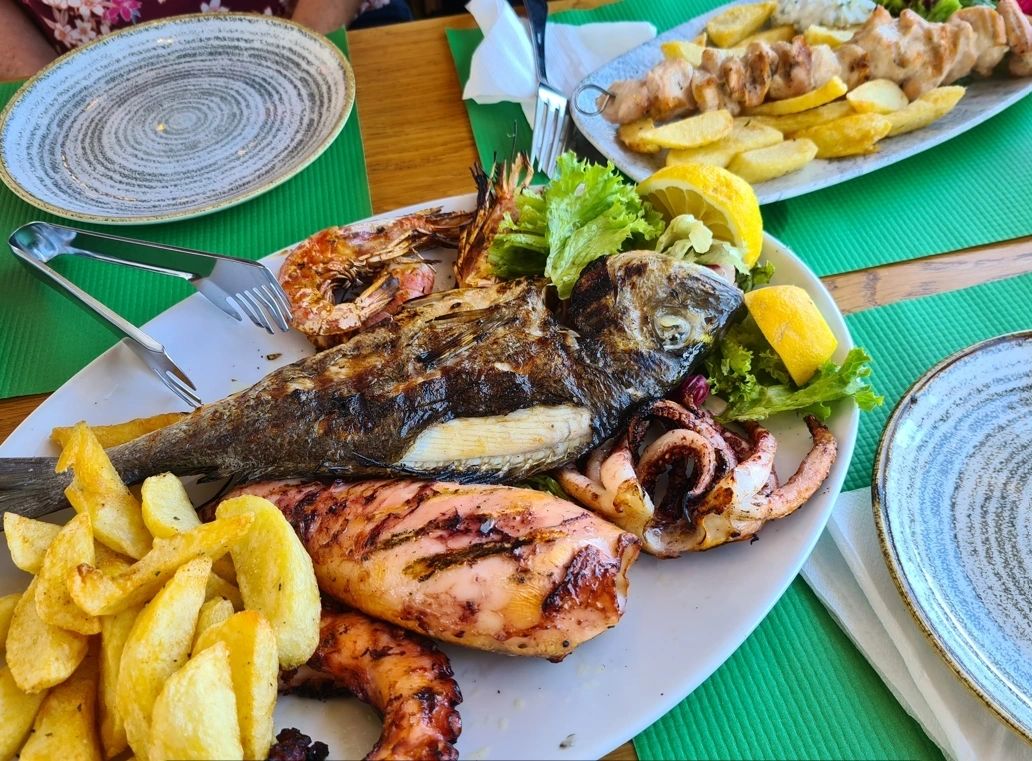
6. Do not accept food recommendations that are not in the menu or “the catch of the day”. These are usually tourist rip-offs
7. Salads – you will see in menu mostly two types of salads. Greek Salad or Cretan salad. The difference is made by the ingredients.
a. Greek salad (or χωριατική): tomatoes, cucumber, onions, peppers, olives, feta, olive oil and oregano. The Greek salad does NOT contain lettuce, spinach, radishes or any other type of whatever

b. Cretan salad (Κρητική σαλάτα): tomatoes, cucumber, onions, peppers, Mizithra cheese, olive oil, oregano and dakos. Dakos is a dry break, made out of wholemeal flour. It is a very hard type of bread, similar to croutons. Don’t eat it if you have teeth issues or wearing braces (unless you let it soak in the tomato juice 😊 ). Its recipe can depend on the region, but the main ingredients remain the same
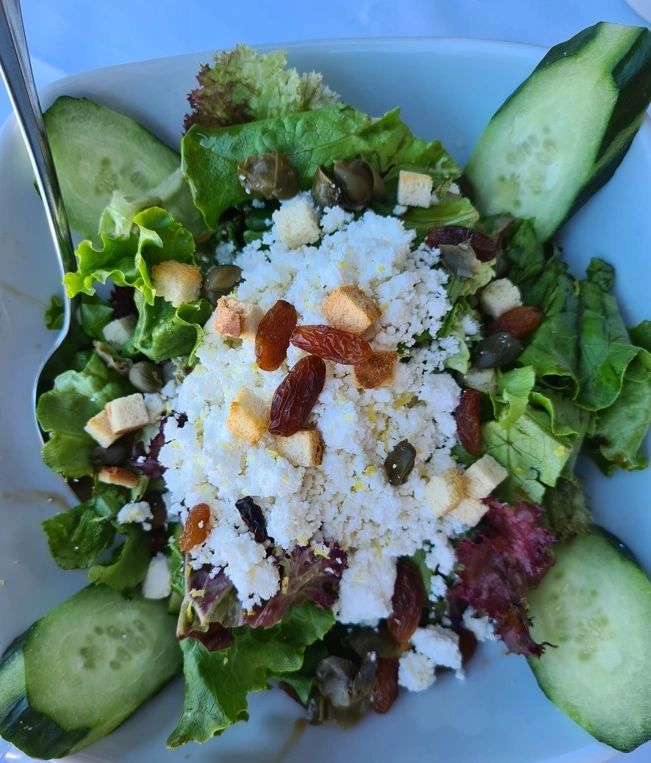
8. Pasta and risotto are usually combined with seafood

9. Gyros is usually served with yoghurt. So if you want tzatziki, you have to mention it
10. Speaking of gyros, it is usually made with pork. I don’t eat this type of meat, only during Christmas and New Year time, so I had a challenge in finding tavernas that have chicken gyros.
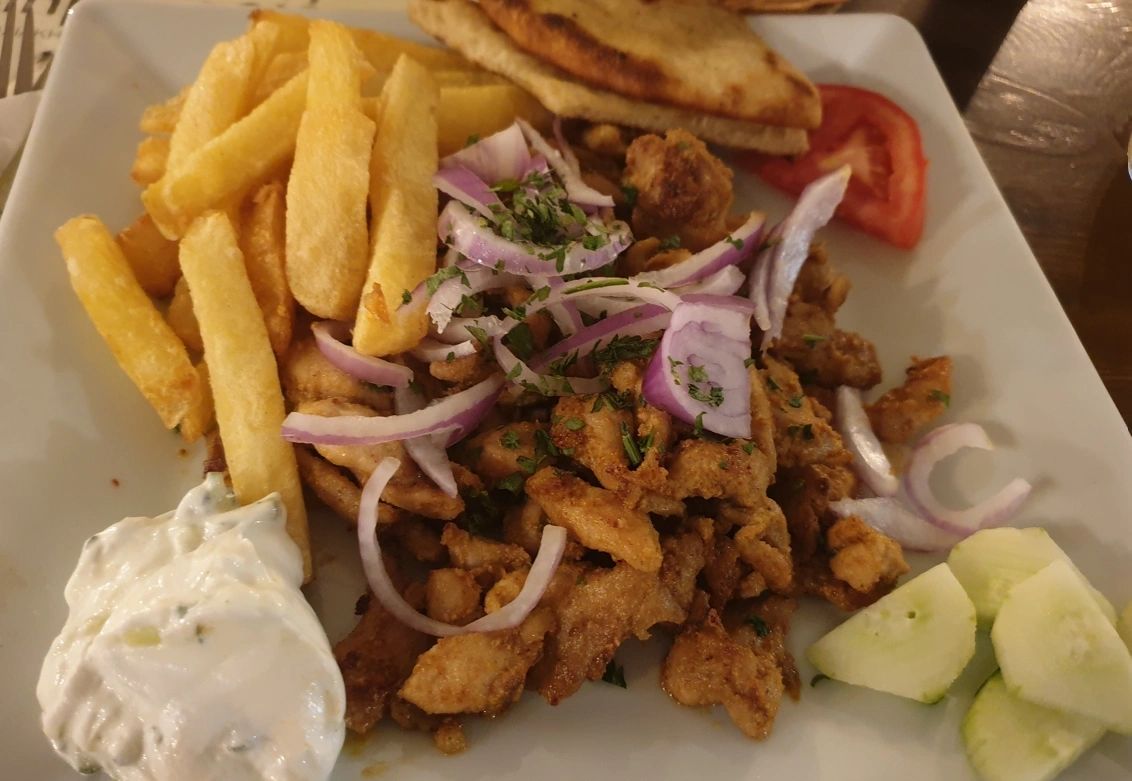
11. Souvlaki is also made with pork meat. If you just order a souvlaki, this is what you will receive. If you don’t eat pork, ask for kotosouvlaki or chicken souvlaki.
12. Tzatziki is made with Greek yoghurt, but the taste depends on the amount of garlic they add
13. Food at the beach is good. Might seem expensive, but it is good 😊
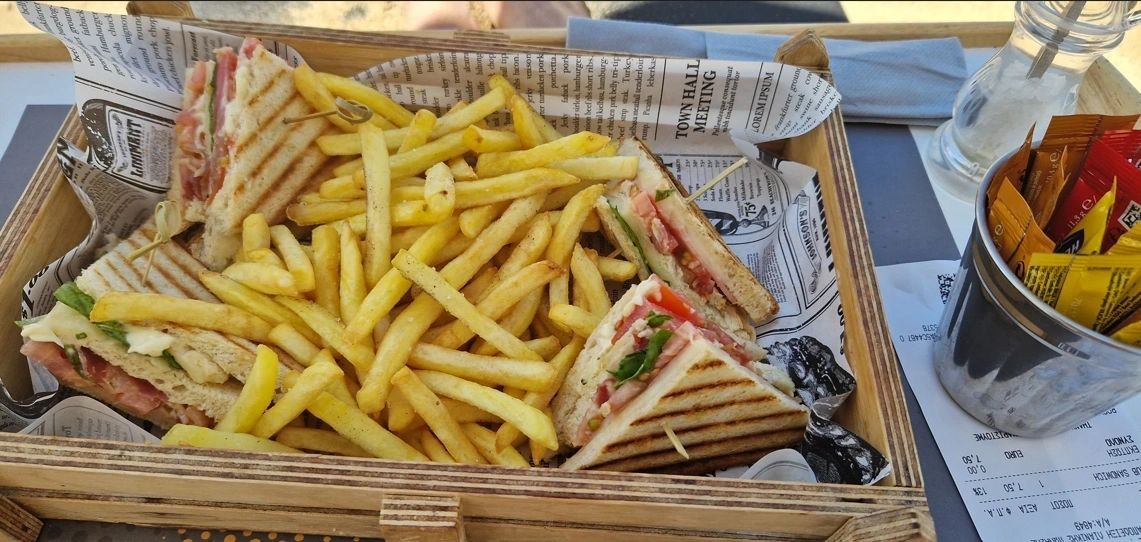
14. Soups are not a usual thing
15. Unless specified in the menu, kalamari are fried 😊
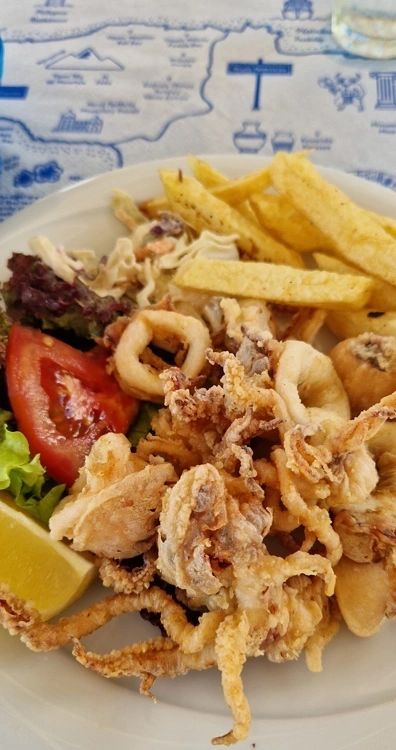
16. Dessert is usually “on the house”. So after you finish your meal, before you receive your check, you get some sweets. It depends from place to place, but what I have received the most: halva (made out of semolina and honey), baklava, kataifi, watermelon/melon, grapes, mosaiko cake, homemade sponge cake. There is no need to order extra sweets or dessert.
Now, your budget is up to you. Most tavernas and restaurants have their prices on tripadvisor or on their official FB or insta page. Do not go to crowded tourist areas, look for tavernas where you hear mostly Greek.
Kali orexi!
 Skyline Stories