
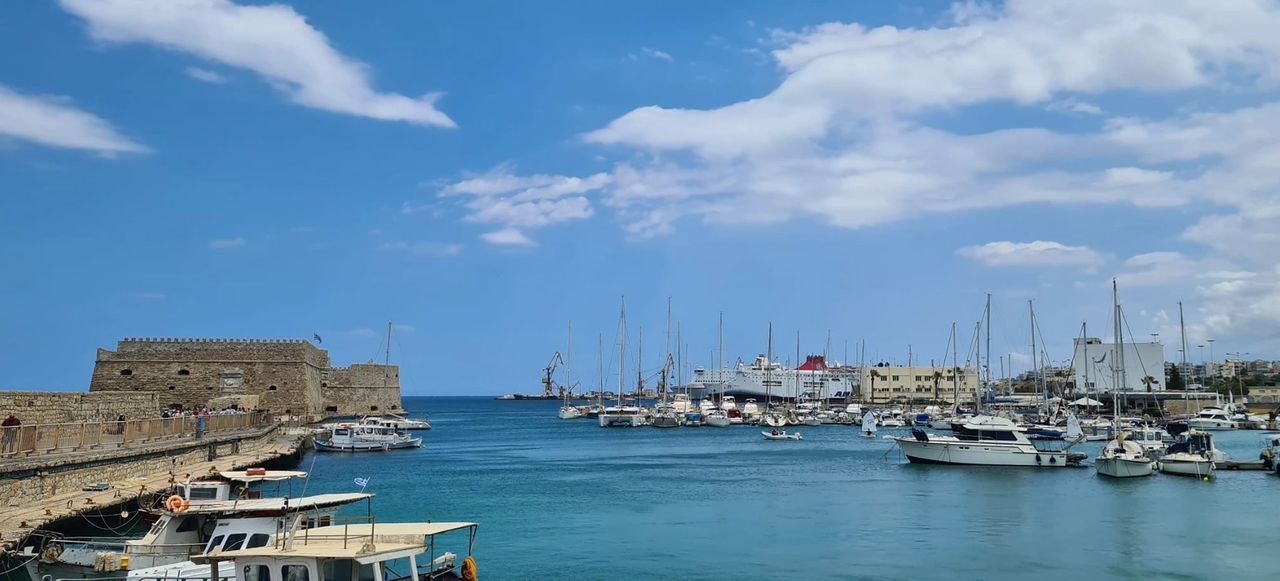
As Crete is becoming a more and more popular travel destination in Europe and a top choice among the Greek islands, I have made a list of tips & tricks and good to know before you go, as I see a lot of questions on several forums or FB groups. I hope they are valuable info.
Disclaimer: most of the things mentioned below I have discovered on-site, let’s say. Some I wish I knew before, some I have learned the hard way 😊
1. Safety:
· Being ranked 3rd on the list of Greek administrative regions by Human Development Index, after Attica (Athens region) and Western Macedonia, Crete is a safe island, with low criminal rate. As a woman who spent some time on the island alone, I can say that I have felt the most safe here. Safer than in my home town. And I was walking on the streets after dark, wearing shorts and a tank top and I haven’t heard not even a single cat-tailing. The locals are very protective with their island’s status as a safe place and with tourists, especially. If anything bad happens, they will help as much as they can to find and punish the culprit.
· Car theft is out of question. I had a shock when I saw a car parked on the road, in front of a house and the keys were left in the car’s door, on the outside. My first thought was: Hristo kai Panagia, in my grandma’s village we don’t leave the keys inside the car, inside our own yard, with the gates closed! Also, with current technology and GPS tracking, finding a stolen car is super easy. And you cannot leave the island without showing the car’s papers while boarding the ferry. And why would a local risk jail time? BTW, the punishments are draconian 😊
· Small offences can occur, such as pickpocketing and car breaks. But those only happen in crowded places and those that do this are not locals! Most likely it will be a tourist that ran out of money rather than a Cretan.
· Small and hidden beaches and those where the locals go are very safe, you don’t have to fear that you might lose your belongings while going to the toilet or for a swim. Of course, don’t wear your Rolex or show a wallet full of cash while you go to the beach.
· Beggars are most likely to be found in major cities, such as Chania or Heraklion and mostly during summer months. Again, they are not locals.
· Locals do not cat-tail single women/girls and they do not bother them if they are alone at the beach. This I can tell from my own experience, as I have been to the beaches by myself quite a lot of times. The only “hey beauty” that I have heard, as a single woman walking around Crete, was this summer in Hersonissos. And the accent was definitely NOT Greek 😊
2. Driving:
· I have detailed in my previous post about road conditions and driving around Crete
· Pay attention and obey the traffic rules, as fines are huge and the police can leave you without your driving license – see all details here
· The locals are polite in traffic, they won’t step out of the car to yell at you 😊
· You will notice a lot of small churches or kandylakia (literal translation is small candle) on the side of the roads. Well, some of them, those that look like a miniature church, with all the details, etc, is usually placed next to a church or a monastery that is hard to reach. Inside you will find an icon of the Virgin or of a Saint and the priest will light candles there as if it were in the church itself. And then comes the sad part. Inside most of the kandylakia, you will find a picture of a person and candles lit. This means that the breathtaking view you see while driving around literally took someone’s breath. It is a shrine built by the remaining family members in honor of their beloved who lost their life in that place of the road. So drive carefully!
3. Money:
· Since the pandemic, Greece has made POS payment mandatory for all merchants. Therefore, you can pay card almost everywhere on the island, so there is no need to bring a huge amount of cash with you. However, I do recommend to have some spare cash, as POS might not work in remote places (remember it has a sim card for communicating with the banking system and in areas with little to no phone coverage, they are sometimes useless)
· You can pay with your phone as well, both with Apple Pay and Google Wallet or any other banking app that allows you to do it. I do recommend to have the physical card with you as well, as sometimes NFC payments do not work, for technical reasons. For example, I paid only with my phone, however on a random day, I couldn’t, even though it was the same shop where I paid in the same morning.
· Some merchants will not accept card payments if the amount is small, such as less that 1.5-2 E. It will not cover the fee that they have to pay per transaction.
· If you buy ONLY cigarettes, Heets or any other tobacco products and pay by card, 10 eurocents fee will be added to the amount. Let’s say a packet is 3.9E, you pay by card. The amount on the POS will be 4E
· Tips are not common practice, but the staff will be more than grateful if you leave some. I usually leave 10%, but only if I am satisfied with the services and food.
· Some places have displayed the type of cards you can pay with, some not. Ask before you sit at a table if you can pay by card or if they accept Maestro or AMEX (they usually accept VISA and Mastercard)
· You can pay with the card in your currency, but the exchange rate will depend on your issuing bank (I have my debit card in RON and I had no issues. I paid by mistake when I chose the cards from Google Wallet 😊)
· The ATMs have a fee when withdrawing money. The cheapest I paid was 2E at Attica Bank, Eurobank, Alpha Bank and Piraues Bank have 2.5E fee. AVOID AT ANY COSTS the Euronet ATMs (the blue and yellow ones). Their fee is approx. 4E/per transaction. The minimum amount that can be withdrawn is 20E. The ATMs also issue small bills. E.g. I needed 100E cash and I received the following bills: 50E, 2x20E, 10E
· Use small Euro bills. Local shops and tavernas rarely accept a 100E bill. Use a 50E bill when paying a bigger amount and use the change for small shopping (such a bottle of water or juice)
· You cannot pay in Greece with meal vouchers or any other type of vouchers issued in your own country, unless specified that they can also be used abroad.
4. First responders/healthcare
· As all countries, there are emergency numbers you can call in case of God forbid! Remember that the abusive use of the lines is subject to penalty, so don’t call the police if there is a small lizard inside your room 😊
o 112 – European emergency service line
o 100 – Hellenic Police
o 199 – Hellenic Fire Service (Firefighters)
o 166 – Medical Emergency Service (Ambulance)
o 108 – Hellenic Coast Guard
· You are entitled for any medical care during your vacations in Crete. As an EU citizen, you have access to public healthcare through your European Health Insurance Card. It is your right as an EU citizen and it can be obtained free of charge from your National Healthcare System. Bear in mind that this card is applicable ONLY in public health system, not private clinics.
· If you are not an EU citizen, a travel health insurance is more than welcome. Make sure it covers seasonal sports as well, if you plan to go windsurfing, for example.
· If you have been diagnosed with a chronic illness that might cause unpleasant situations during your stay in Crete, have a translated copy of your medical records. This also applies if you are undergoing any treatment that requires specific medication.
· Pharmacies can be found in almost all places, but bear in mind that they might be closed in the afternoon. OTC are sold, but subject to local laws
· There are 6 major hospitals in Crete: Rethymno, Sitia, Agios Nikolaos, Chania and 2 in Heraklion. The biggest is the University Hospital in Heraklion. Being a major tourist destination, almost all doctors speak English
· There are private clinics and doctor’s offices in tourist places, such as Malia, Hersonissos, Agia Marina, etc.
· Dentists and orthodontists have offices in all major cities and they speak English (when I was wearing braces, I found one that speaks Romanian 😊 )
5. Other things to consider:
· Mosquitos can be a true pain, especially after a rainy period.
· If you stay in traditional homes or your room is at ground level, expect geckos 😊
· The Cretans are animal lovers, so you will see a lot of pet friendly places, from beaches to tavernas. Be careful if you have cat allergy, as they rule the island 😊
· The air is salty and humid. I am hyperallergic to dust and I had a great time here. I even forgot that I take antihistamines.
· Heat and heatwaves are a serious concern, especially in July and August. If you plan to go in the peak season, stay indoors at noon, drink a lot of water, use sunscreen and hat!
· Wildifires can happen, but they are not so common, as it is in mainland Greece or other islands. The rocky terrain with little vegetation also help.
· Landslides and floodings can happen, especially after a massive rainfall. The last time was in September 2022 and unfortunately lives were lost ☹
· Winters are mild, with temperatures up to 15-18 degrees, but in January 2022 Crete was covered in snow. All the island, not only the mountain peaks.
· Winds and high waves are vacation destroyers.
· Remote beaches DO NOT have lifeguard! If there is strong wind and high waves, DO NOT GO SWIMMING! Also, if the red flag has been raised, there are no lifeguard services.
· Goats are the third type of inhabitants, after humans and cats, so expect them everywhere 😊 if you drive to Balos or Seitan Limania, expect a traffic jam
· Streets in major cities can be slippery after rain. They are paved with marble-like tiles, especially the sidewalks, and they are a real threat.
· If you plan to bring your dog, clean after them 😊 the municipality of Chania even offers free poop bags
· Smoking is not allowed indoors, at archaeological sites and in natural parks (such as Samaria or Vai), only in designated places.
The list will be updated with more items 😊
 Skyline Stories